





What's Happening?
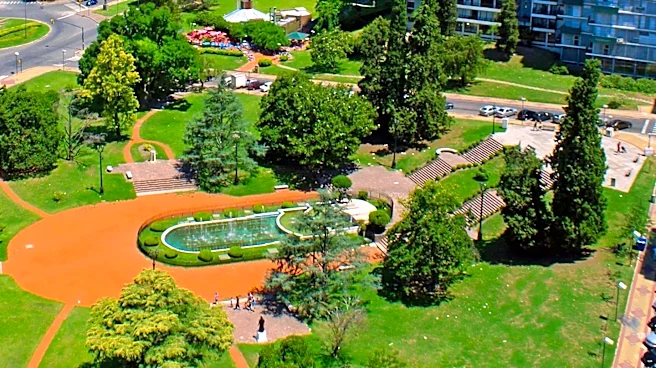
In 2023, Hoboken, New Jersey, opened a 5.4-acre park on a former industrial site, designed to hold up to 2 million gallons of stormwater. Known as ResilienCity Park, it is the largest of its kind in New Jersey, transforming a blighted area into a dual-purpose
public space for recreation and flood protection. The park features a flood-control system with both above-ground and underground storage, aimed at protecting low-lying areas from flash flooding. The project was funded through federal, state, and county sources, including a $10 million FEMA grant, and was completed without increasing local taxes.
Why It's Important?
The opening of ResilienCity Park represents a significant step in urban climate adaptation, showcasing how cities can integrate green infrastructure to mitigate the impacts of climate change. By addressing flood risks and providing recreational space, the park enhances community resilience and quality of life. This initiative serves as a model for other urban areas facing similar environmental challenges, highlighting the importance of strategic investments in sustainable infrastructure. The project also underscores the role of federal and state support in enabling local governments to implement large-scale environmental solutions.
What's Next?
Hoboken plans to expand its resiliency efforts, with additional parks and infrastructure projects in the pipeline. These developments aim to further increase the city's capacity to manage stormwater and reduce flood risks. The success of ResilienCity Park may encourage other municipalities to pursue similar projects, potentially leading to broader adoption of green infrastructure solutions across the region. Continued collaboration between local, state, and federal entities will be crucial in sustaining these efforts and addressing the long-term impacts of climate change.