







What's Happening?
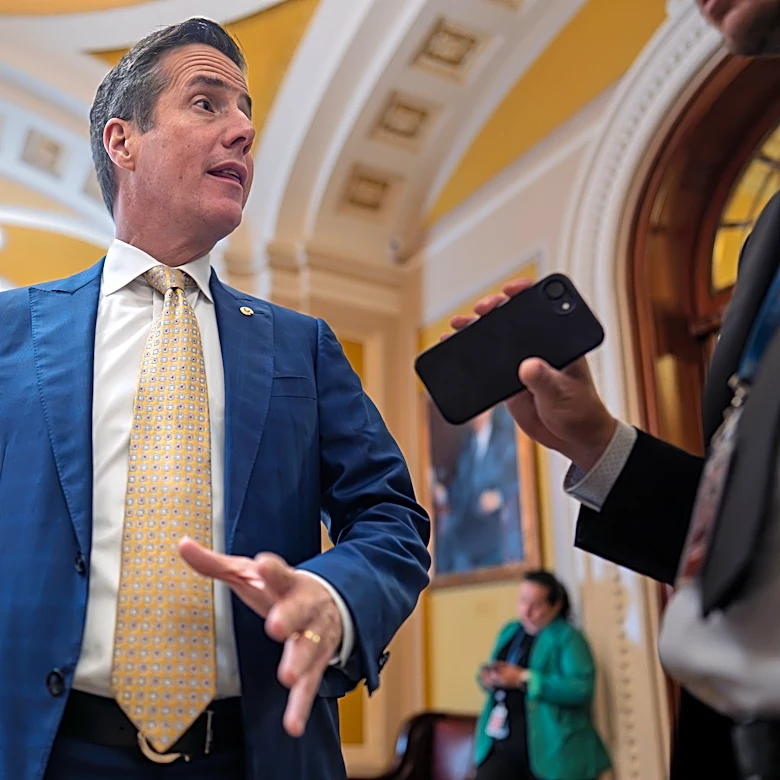
Despite ongoing discussions in Congress regarding a potential federal data privacy law, states are continuing to enact their own regulations, driven by constituent concerns over technology and artificial intelligence (AI). Virginia Delegate Kirk McPike
noted a growing 'trust issue' among the public regarding new technologies, particularly social media and AI, which has prompted state lawmakers to implement safeguards. Virginia's comprehensive privacy law, enacted in 2021 and effective in 2023, grants residents rights over their personal data and allows them to request records from companies. Other states, including California, Florida, New York, Utah, Arkansas, Maryland, and Texas, have also passed age verification or age-appropriate design laws for social media. This fragmented regulatory landscape is a concern for business groups, such as the U.S. Chamber of Commerce, which argues that it increases compliance costs and hinders innovation. However, state lawmakers like McPike believe that in the absence of federal leadership, states will continue to address these issues.
Why It's Important?
The continued proliferation of state-level data privacy and social media regulations creates a complex and potentially costly compliance environment for businesses operating across the United States. Companies must navigate a patchwork of differing laws, which can lead to increased legal expenses, operational adjustments, and a higher risk of non-compliance. This fragmentation can particularly burden small businesses that may lack the resources to adapt to varied state requirements. While some state laws, like Virginia's, are seen as potential models, the lack of a unified federal standard can stifle innovation by creating uncertainty and disincentivizing investment in new technologies. The 'trust issue' highlighted by lawmakers reflects a broader societal concern about data exploitation and the impact of technology on individuals, especially young people. This ongoing legislative activity at the state level underscores the urgent need for a comprehensive federal privacy framework to provide clarity and consistency for both consumers and businesses.
What's Next?
The trend of states enacting their own data privacy and social media laws is expected to continue until there is clear leadership at the federal level. Lawmakers like Virginia Delegate Kirk McPike anticipate that states will increasingly adopt more targeted approaches to regulation, focusing on specific technologies or issues rather than broad frameworks. This could lead to a further diversification of state laws, making compliance even more challenging for businesses. There is a call for state lawmakers to collaborate across jurisdictional lines to develop harmonized models, but the immediate future points towards continued state-by-state legislative efforts. Businesses, especially those in the tech sector, will need to closely monitor legislative developments in each state where they operate and adapt their data handling practices accordingly. The ongoing debate also highlights the potential for federal preemption, where a national law could supersede state regulations, but the timeline for such legislation remains uncertain.
Beyond the Headlines
The fragmented approach to data privacy regulation in the U.S. reveals a deeper tension between states' rights and the need for national uniformity in a digital economy that transcends geographical borders. This situation not only impacts businesses but also affects consumers, who may have varying levels of data protection depending on their state of residence. The 'trust issue' with technology, particularly social media and AI, reflects a growing public demand for greater accountability from tech companies and more robust protections for personal data. This legislative environment could accelerate the development of privacy-enhancing technologies and business models that prioritize user data protection. However, it also risks creating a digital divide, where some states offer stronger protections than others, potentially leading to a 'race to the bottom' or a 'race to the top' in regulatory standards. Ultimately, the ongoing state-level activity serves as a powerful signal to Congress that the status quo is unsustainable and that a comprehensive federal solution is increasingly imperative for both economic stability and individual rights.