


What's Happening?
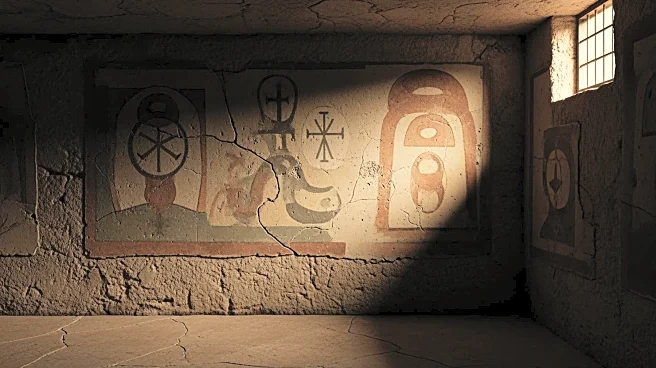
During renovations at the Warsaw District Court, Holocaust-era murals were uncovered in a basement passage that once connected the Warsaw Ghetto to the city's 'Aryan' side. These paintings, believed to have been created during the Holocaust, include provocative
images and childlike decorations. The passage was historically used to smuggle children and supplies out of the ghetto. The murals' origins remain partly unclear, with theories suggesting they were created by Jewish prisoners or as part of a decorative plan for a café. The site, previously closed to the public, will soon be inaccessible again as the court's archive is returned to its location.
Why It's Important?
The discovery of these murals provides a rare glimpse into the history and experiences of those who lived through the Holocaust. It highlights the resilience and creativity of individuals in dire circumstances. The murals serve as a poignant reminder of the atrocities committed during the Holocaust and the importance of preserving historical sites and artifacts. This find contributes to the broader understanding of Jewish history in Warsaw and the role of art as a form of resistance and documentation during times of oppression.
What's Next?
The murals will undergo a dedicated conservation process to preserve them for future generations. However, public access will be limited once the court's archive is reinstated. This raises questions about the accessibility of historical artifacts and the balance between preservation and public engagement. Scholars and historians may advocate for increased access or digital documentation to ensure these important pieces of history are not forgotten.