







What's Happening?
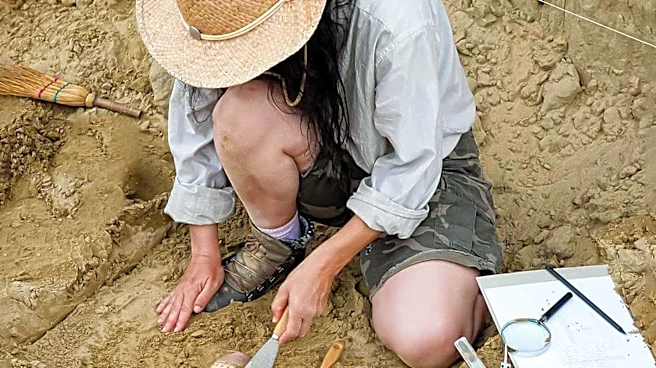
Recent excavations at Checkpoint Charlie in Berlin have unearthed additional remnants of the former East German border crossing. These discoveries include sections of boundary walls, asphalt surfaces, and the foundation of a command post utilized by East German border troops
between 1985 and 1989. Parts of a vehicle barrier, originally erected after a significant tank standoff in October 1961, also came to light. Susanne Muhle of the Berlin Wall Foundation stated that these finds are 'significant historical testimonies of the former border crossing,' especially given the extensive alterations made to the site since German reunification in 1990. The remnants were found during ongoing excavations on a plot where a new education and memorial site is planned. The Berlin Wall Foundation is currently evaluating how to preserve and display these newly discovered historical elements to the public. Initially, the exposed areas will be refilled as a standard conservation procedure.
Why It's Important?
The discovery of these additional remnants at Checkpoint Charlie holds significant importance for understanding the Cold War era and the division of Berlin. Checkpoint Charlie was a pivotal crossing point between East and West Berlin, primarily used by Western Allied military personnel, diplomats, and foreign visitors. The site was famously associated with a tense standoff between U.S. and Soviet tanks in October 1961, an event that captured global attention. These new findings provide tangible evidence of the physical infrastructure and operational aspects of the border, offering deeper insights into the daily realities and security measures of the divided city. For historians and the public, these discoveries contribute to a more complete narrative of the Cold War, highlighting the meticulous control and separation enforced by the East German regime. The preservation and exhibition of these artifacts will enhance educational efforts and serve as a powerful reminder of a critical period in U.S.-Soviet relations and European history.
What's Next?
The Berlin Wall Foundation is currently assessing the best methods to preserve and publicly display the newly discovered remnants at Checkpoint Charlie. While the exposed areas are slated for temporary refilling as a conservation measure, the long-term plan involves integrating these findings into the planned education and memorial site. This future site aims to offer a comprehensive understanding of the Cold War and the significance of Checkpoint Charlie. The foundation will likely engage with historical experts and conservationists to determine the most appropriate strategies for exhibition, potentially involving archaeological displays or interpretive installations. The goal is to ensure that these 'significant historical testimonies' are accessible to the public, enriching the visitor experience and providing a more authentic portrayal of the former border crossing. Future developments will focus on the design and implementation of the new memorial site, incorporating these recent discoveries to enhance its educational value.
Beyond the Headlines
Beyond the immediate historical significance, the ongoing discoveries at Checkpoint Charlie underscore the enduring legacy of the Cold War and its impact on global geopolitics. Checkpoint Charlie, often featured in thrillers and spy novels, symbolizes the ideological divide and the constant tension that characterized the Cold War. The site's transformation from a heavily fortified border crossing to a major tourist attraction, now revealing more of its hidden past, reflects a broader societal effort to confront and learn from historical divisions. The preservation of these remnants serves as a tangible link to a period when the world stood on the brink of major conflict, offering lessons in international relations and the consequences of political fragmentation. The continuous uncovering of such historical layers encourages a deeper reflection on the human cost of division and the importance of historical memory in shaping contemporary understanding of peace and conflict.