








What's Happening?
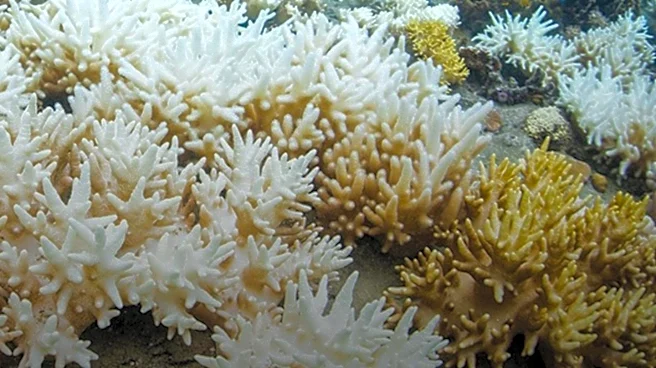
Coral reefs globally are experiencing a significant bleaching event, with approximately 84% of the world's coral reef area subjected to bleaching-level heat stress from early 2023 to mid-2025. This marks the world's fourth global coral bleaching event.
In Egypt's Red Sea, often referred to as 'super coral' due to its unusual resilience, heatwaves in 2023 and 2024 have caused bleaching. A survey by the Hurghada Environmental Protection and Conservation Association (HEPCA) found that the 2024 event affected 9% of surveyed coral colonies in Hurghada and about 50% in Wadi El Gemal. While northern areas of the Red Sea were previously sheltered, the 2024 event extended its reach. Preliminary estimates from HEPCA suggest recovery rates for the 2024 bleaching event in 2025 could range from 75% to 88%, depending on species and location, indicating varying resilience. Scientists are investigating whether this resilience is due to evolutionary history, where heat-tolerant species spread into the Red Sea, or factors like water circulation bringing cooler water to the surface.
Why It's Important?
The widespread coral bleaching event has profound implications for marine ecosystems and the global environment. Coral reefs, covering less than 1% of the seafloor, support at least 25% of marine species, making their degradation a significant threat to biodiversity. Bleaching occurs when heat-stressed corals expel the algae living in their tissues, losing their color and a vital nutrient source. While bleached coral is not immediately dead, prolonged stress can prevent recovery, leading to mortality. The resilience observed in Egypt's Red Sea corals offers a critical area of study for understanding how some corals can withstand rising ocean temperatures. This research could inform conservation strategies and restoration efforts worldwide, especially as climate change continues to warm oceans. The varying thermal tolerance among different coral species and locations, as highlighted by studies in Hawaii, underscores the need for tailored conservation approaches that consider both biological and environmental diversity.
What's Next?
Scientists will continue to monitor the recovery of coral reefs, particularly in resilient areas like Egypt's Red Sea, to better understand the mechanisms behind their survival. Research into the thermal tolerance of different coral species and populations will be crucial for predicting which corals are more likely to adapt to warming oceans. Conservation efforts will likely focus on developing strategies that account for the diverse responses of corals to heat stress, potentially including selective breeding or transplantation of more resilient species. The ongoing global bleaching event necessitates urgent action to mitigate climate change and reduce local stressors such as overfishing and pollution, which exacerbate the vulnerability of coral reefs. Further studies will aim to determine if the observed recovery rates in areas like the Red Sea are sustainable and indicative of long-term resilience against future heatwaves.
Beyond the Headlines
The phenomenon of coral bleaching extends beyond immediate ecological damage, touching upon broader ethical and economic considerations. The potential loss of coral reefs, often referred to as the 'rainforests of the sea,' represents an irreversible loss of biodiversity and natural heritage. Economically, coral reefs provide essential ecosystem services, including coastal protection, tourism revenue, and fisheries support. Their degradation can lead to significant economic losses for communities reliant on these resources. The varying resilience of corals also raises ethical questions about intervention strategies, such as which species or locations should be prioritized for conservation and whether human intervention in natural selection is appropriate. Furthermore, the ongoing bleaching events serve as a stark reminder of the interconnectedness of global climate systems and the urgent need for international cooperation to address climate change, which is the primary driver of rising ocean temperatures and coral stress.