




What's Happening?
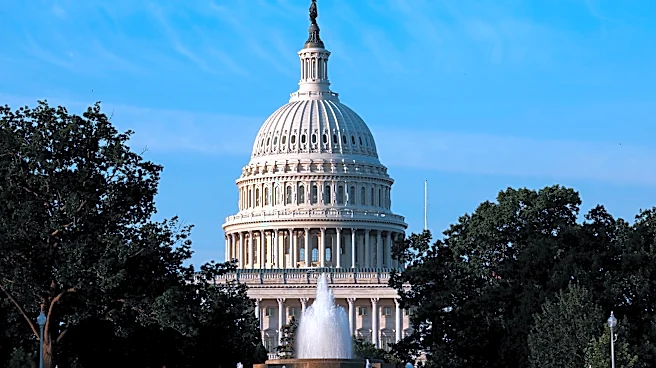
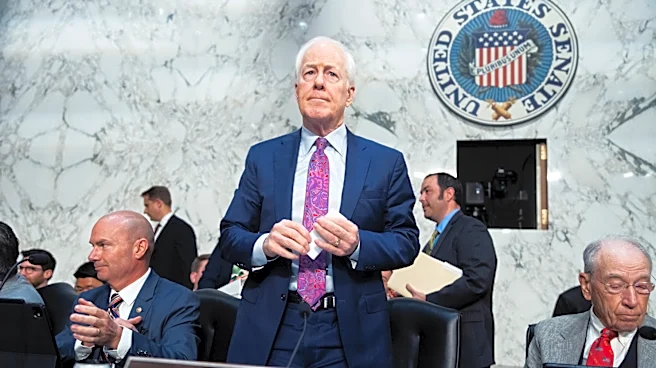
The U.S. Senate has introduced a bipartisan provision to temporarily halt a rule proposed by the Trump Administration that would allow federal agencies to cancel grants without cause. This rule, put forward by the White House Office of Management and
Budget, has faced criticism from biomedical researchers and business groups for potentially undermining scientific research and conflicting with Congress's control over federal funding. The Senate's provision aims to freeze this rule until December 11, providing a temporary reprieve as part of ongoing appropriations discussions. However, this provision is not yet law, as it lacks a counterpart in the House-passed bill, and both chambers are currently in recess.
Why It's Important?
The proposed freeze is significant as it addresses concerns from the scientific community about the stability and predictability of research funding. The ability for agencies to cancel grants without cause could disrupt long-term scientific projects and deter researchers from pursuing innovative studies. This move by the Senate highlights the ongoing tension between the executive branch's regulatory ambitions and the legislative branch's control over funding. The outcome of this provision could impact the future of U.S. biomedical research, affecting universities, research institutions, and the broader scientific community that relies on federal grants.
What's Next?
The Senate's provision is an initial step in the appropriations process, and further negotiations are expected when Congress reconvenes. The House and Senate will need to reconcile their differences on this issue, and the outcome will depend on the broader context of budgetary discussions. Stakeholders in the scientific and business communities will likely continue to advocate for stable funding mechanisms, while policymakers will need to balance regulatory oversight with the need to support scientific innovation.