






What's Happening?
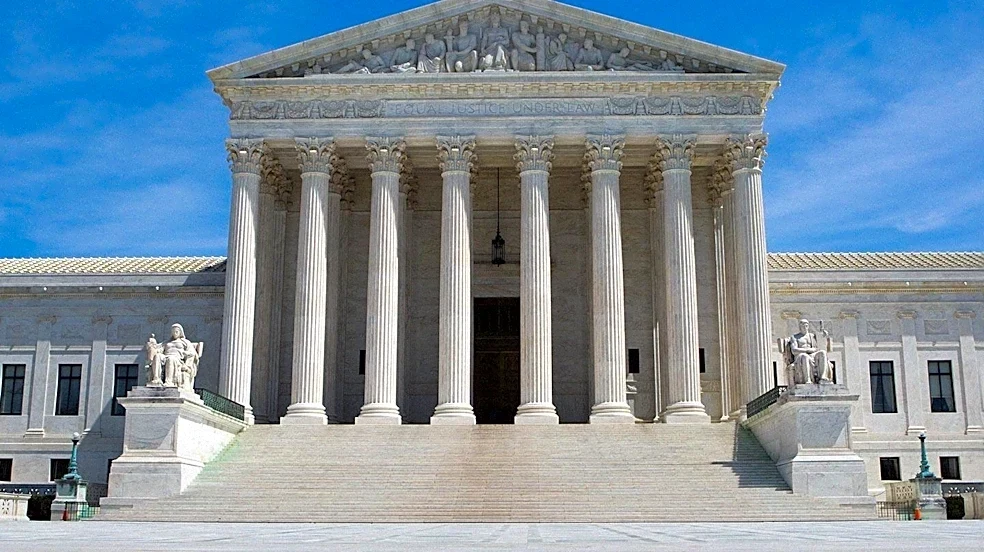
In 1857, the U.S. Supreme Court issued a landmark ruling in the case of Dred Scott v. John F. A. Sandford, stating that enslaved people were not citizens of the United States and therefore could not claim protection from the federal government or the courts.
The majority opinion, read by Chief Justice Roger B. Taney, also declared that Congress lacked the authority to prohibit slavery in federal territories. This decision stemmed from an 11-year legal battle initiated by Dred Scott, an enslaved Black man, and his wife Harriet, who sued for their freedom after residing in a free territory. Their claim was based on previous legal precedents where enslaved individuals held in free territories were granted freedom upon returning to slave states. However, the Supreme Court overturned lower court rulings that had favored Scott, ultimately dismissing the case for lack of jurisdiction. This ruling significantly escalated tensions leading to the Civil War.
Why It's Important?
The Dred Scott v. Sandford decision is widely regarded by legal scholars as one of the worst rulings in Supreme Court history due to its profound and negative impact on civil rights and national unity. By denying citizenship to enslaved people and asserting Congress's inability to regulate slavery in territories, the Court effectively undermined efforts to resolve the contentious issue of slavery through legal and political means. This ruling intensified the national debate over slavery, pushing the country closer to civil conflict. It stripped a significant portion of the population of fundamental rights and legal standing, reinforcing the institution of slavery and challenging the principles of equality and liberty. The decision's long-term implications were so severe that it necessitated constitutional amendments to rectify, specifically the 13th and 14th Amendments, which abolished slavery and granted citizenship to all persons born or naturalized in the United States.
What's Next?
The immediate aftermath of the Dred Scott decision saw increased polarization and contributed to the outbreak of the Civil War. The legal and moral ramifications of the ruling were eventually addressed through constitutional amendments. The 13th Amendment, ratified in 1865, abolished slavery, and the 14th Amendment, ratified in 1868, explicitly granted citizenship to all persons born or naturalized in the United States, thereby overturning the core tenets of the Dred Scott decision. These amendments fundamentally reshaped the legal landscape regarding civil rights and citizenship in the U.S., establishing a new foundation for equality under the law. The case continues to be a critical point of study in American legal history, highlighting the judiciary's role in shaping national policy and the enduring struggle for civil liberties.
Beyond the Headlines
The Dred Scott decision exposed deep-seated ethical and legal conflicts within the U.S. legal system regarding human rights and the interpretation of the Constitution. It underscored the inherent tension between states' rights and federal authority, particularly concerning the institution of slavery. The ruling's assertion that Black individuals, whether enslaved or free, could not be citizens, reflected and entrenched the racial prejudices of the era within the highest legal authority. This decision serves as a stark reminder of how judicial interpretations can either uphold or undermine fundamental human dignity and equality. Its eventual reversal through constitutional amendments demonstrates the capacity for societal and legal evolution, albeit often through significant struggle and conflict, to correct profound injustices and align legal frameworks with evolving moral standards.