









What's Happening?
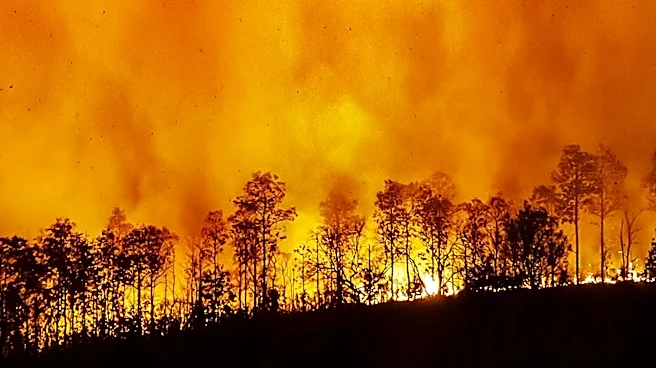
Three firefighters lost their lives and two others were injured while battling wildfires along the Colorado-Utah border. The US Wildland Fire Service, which coordinates wildfire suppression efforts, confirmed the fatalities during a joint response to
the Knowles and Gore fires. The agency expressed its condolences, emphasizing the bravery and sacrifice of the firefighters. The wildfires have been exacerbated by hot, dry, and windy weather, with Utah experiencing one of its most severe wildfire seasons due to record-low snowpack and the warmest winter on record. The Cottonwood fire in Utah's Fishlake National Forest has grown significantly, becoming the largest active wildfire in the US. Both Utah and Colorado have declared states of emergency, with Utah implementing a fireworks ban ahead of the Fourth of July. The National Weather Service has issued red flag warnings across the western US, and power shutoffs have been enacted as a precautionary measure.
Why It's Important?
The tragic deaths of the firefighters highlight the increasing dangers faced by those combating wildfires, which are becoming more frequent and severe due to climate change. The ongoing wildfires pose significant risks to communities, infrastructure, and ecosystems across the western US. The declarations of emergency and the deployment of additional resources underscore the urgent need for effective wildfire management strategies. The situation also reflects broader environmental challenges, as extreme weather conditions linked to climate change continue to impact the region. The economic and social costs of these fires are substantial, affecting local economies, public health, and safety.
What's Next?
Efforts to contain the wildfires will continue, with additional firefighting resources being deployed to the affected areas. Authorities will likely assess the damage and consider further measures to prevent future fires, such as improving forest management practices and enhancing emergency response capabilities. The ongoing climate crisis may prompt policymakers to prioritize environmental policies aimed at reducing carbon emissions and mitigating the impacts of climate change. Communities in the affected regions may also need to adapt to the increasing frequency of extreme weather events.
Beyond the Headlines
The wildfires serve as a stark reminder of the broader implications of climate change, including the ethical responsibility to address environmental degradation. The loss of life and property raises questions about the adequacy of current policies and the need for more robust climate action. The situation also highlights the importance of supporting the mental health and well-being of first responders, who face significant stress and danger in their roles. Long-term, the increasing severity of wildfires may lead to shifts in population and land use patterns as communities seek to reduce their vulnerability to such disasters.