






What's Happening?
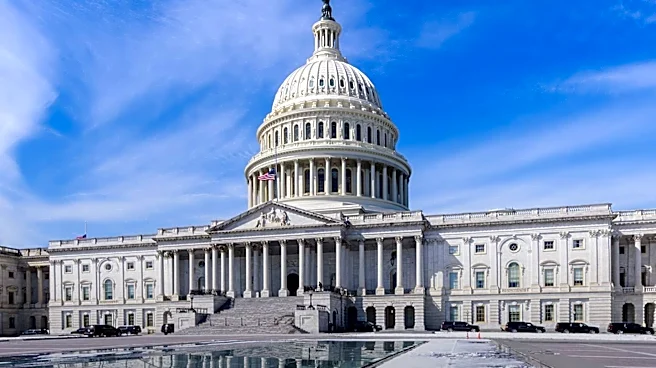
In the upcoming 2026 midterm elections, the congressional district of U.S. Representative Jodey Arrington, a Republican from Lubbock, Texas, will be among those tested under a newly approved redistricting map. This map, pushed through by Texas Republicans
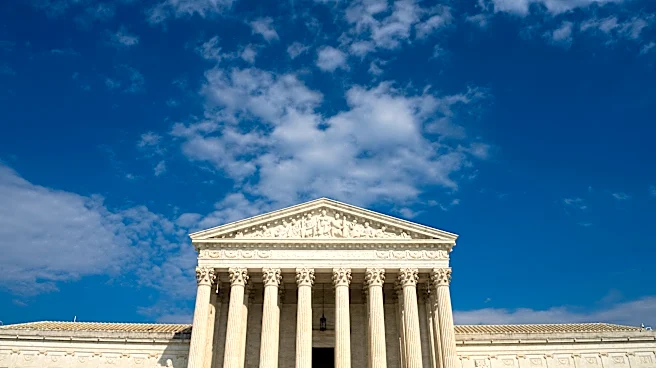
at the request of President Trump last year, aims to secure five new seats for the party in the U.S. House. After facing several legal challenges, the U.S. Supreme Court affirmed the map's constitutionality in December 2025. This election cycle marks the first time the new map will be in effect, with political observers closely watching to see if it results in a net gain for Republicans. While President Trump has publicly commented on six other open Republican-held U.S. House seats in Texas, he has not yet weighed in on the Texas 19th district, currently represented by Arrington. The broader Texas political landscape for 2026 also includes competitive races for a U.S. Senate seat and the governorship, with Democrats aiming to make significant inroads.
Why It's Important?
The implementation of the new redistricting map in Texas holds significant implications for the balance of power in the U.S. House of Representatives. If the map successfully delivers the projected five additional seats to Republicans, it could strengthen the party's majority in Congress, influencing legislative priorities and the national political agenda. This shift could impact various policy areas, including economic legislation, social issues, and foreign policy, potentially making it more challenging for the opposing party to pass its initiatives. The focus on Representative Arrington's district, among others, highlights the strategic importance of these newly drawn boundaries. The absence of President Trump's endorsement in Arrington's specific race, despite his involvement in others, could also be a subtle indicator of the perceived security or complexity of that particular district under the new map. The outcome in Texas will serve as a critical barometer for the effectiveness of partisan redistricting efforts nationwide and could set precedents for future electoral strategies.
What's Next?
As the 2026 midterm elections approach, the performance of the new redistricting map in Texas will be under intense scrutiny. Political analysts will be closely monitoring the results in districts like Representative Arrington's to assess whether the Republican strategy to gain U.S. House seats proves successful. The election will also reveal the extent of voter turnout and how it is influenced by key issues such as affordability, property taxes, and the controversial presence of data centers, which have become a rare bipartisan concern in Texas. The outcomes in the U.S. Senate and gubernatorial races will further indicate whether Texas is shifting towards a more competitive political landscape, potentially turning purple. The reactions from both Republican and Democratic leadership following the election will likely shape future campaign strategies and legislative efforts, both at the state and national levels. The long-term impact of this redistricting on Texas's political identity and its representation in Washington will become clearer after November 2026.
Beyond the Headlines
The testing of Texas's new redistricting map in the 2026 midterms extends beyond immediate electoral gains, touching upon fundamental aspects of democratic representation and political fairness. Redistricting, often a highly partisan process, can significantly influence the demographic and ideological makeup of congressional districts, potentially leading to gerrymandering that entrenches one party's power. The Supreme Court's decision to uphold this map, despite legal challenges, underscores the ongoing debate about the role of courts in overseeing electoral boundaries and the balance between state legislative power and voter equity. The outcome in Texas could embolden or deter similar redistricting efforts in other states, shaping the national electoral map for years to come. Furthermore, the focus on local issues like data centers, which unite both sides of the aisle, suggests a growing public demand for practical governance over partisan divides. This election will not only determine who represents Texans but also offer insights into the evolving dynamics of American democracy, where local concerns increasingly intersect with national political strategies.