



What's Happening?
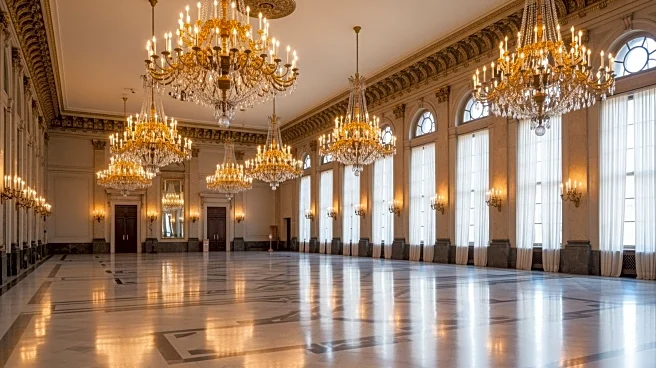
President Donald Trump conducted a presentation aboard Air Force One to defend the design of his controversial White House ballroom. This presentation came after the New York Times highlighted several design flaws, such as fake windows, obstructive columns,
and an oversized rooftop. Trump showcased large mockups of the $400 million ballroom, emphasizing its importance and claiming it would be the greatest ballroom globally. Despite the criticism, Trump stated that construction is ahead of schedule and under budget. The ballroom, which necessitated the demolition of the East Wing, has faced public backlash, with over 97% of public feedback opposing the construction. Former White House residents, including Patti Davis, have also criticized the renovations, describing them as destructive.
Why It's Important?
The construction of the White House ballroom has significant implications for public perception and historical preservation. The project, which has doubled in cost from initial estimates, raises concerns about fiscal responsibility and the prioritization of resources. The public's overwhelming opposition highlights a disconnect between the administration's vision and public sentiment. Additionally, the criticism from former White House residents underscores the cultural and historical impact of altering a national landmark. The ballroom's construction could influence future discussions on the preservation of historical sites and the role of private funding in public projects.
What's Next?
The ongoing construction of the ballroom and the associated public and political reactions will likely continue to be a point of contention. As the project progresses, further scrutiny from media, historians, and the public is expected. The administration may face additional legal challenges or public protests, potentially impacting the timeline and completion of the project. The outcome of these developments could set precedents for future renovations of national landmarks and the involvement of private donors in public infrastructure projects.
Beyond the Headlines
The ballroom's construction raises broader questions about the balance between modernization and historical preservation. The decision to demolish part of the White House for a new ballroom reflects broader cultural debates about the value of historical architecture versus contemporary needs. This situation also highlights the influence of private wealth in shaping public spaces, which could lead to discussions about transparency and accountability in public-private partnerships. The aesthetic choices, criticized for their opulence, may also spark conversations about taste and representation in national symbols.