


What's Happening?
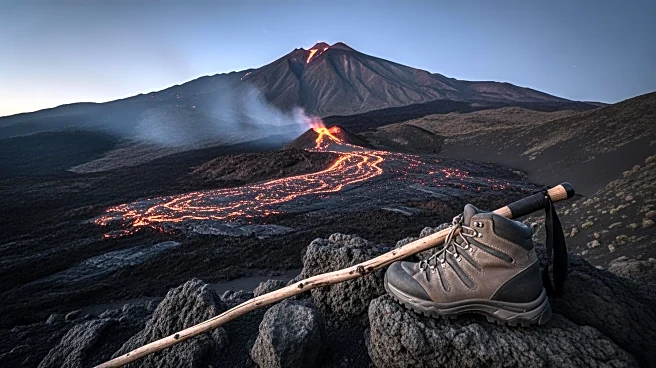
Guides at Mount Etna, Europe's most active volcano located in Sicily, Italy, are protesting against new safety restrictions imposed by local authorities. These measures were introduced following a series of eruptions that began on December 24. The restrictions limit
excursions to daylight hours and enforce a minimum distance of 200 meters from the lava flows. Additionally, group sizes are capped at ten people, a rule now strictly enforced with the help of drones. The guides argue that these restrictions undermine their professional roles and are unnecessary given the slow-moving nature of the lava, which they claim can be safely viewed. The protests have led to the suspension of guided tours, leaving tourists with limited options to experience the volcano up close.
Why It's Important?
The new restrictions at Mount Etna have significant implications for the local tourism industry, which relies heavily on the allure of the volcano. The guides' protest highlights the tension between ensuring public safety and maintaining economic activity. The restrictions could lead to a decrease in tourist visits, impacting local businesses and the livelihoods of those who depend on tourism. The situation underscores the challenges faced by regions that balance natural attractions with safety concerns, especially in areas prone to natural hazards. The outcome of this dispute could set a precedent for how similar situations are managed in other tourist destinations worldwide.
What's Next?
The guides are expected to continue their strike in the coming days, seeking a compromise with authorities that would allow them to resume their activities while ensuring visitor safety. The ongoing negotiations will likely involve discussions on how to balance safety with the economic needs of the local community. The outcome could influence future policies on managing tourist access to natural sites, particularly those with inherent risks. Stakeholders, including local businesses and government officials, will be closely monitoring the situation to assess its impact on the region's tourism sector.