




What's Happening?
Secretary of the Interior Doug Burgum has signed a Secretary’s Order aimed at expanding grazing opportunities, improving federal rangeland health, and providing support for American ranchers. This order implements President Trump’s Executive Order on
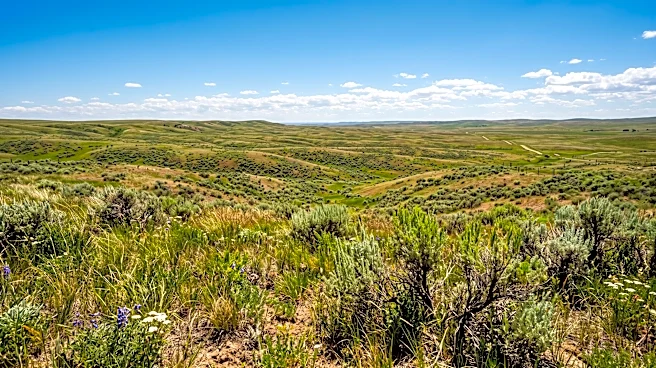
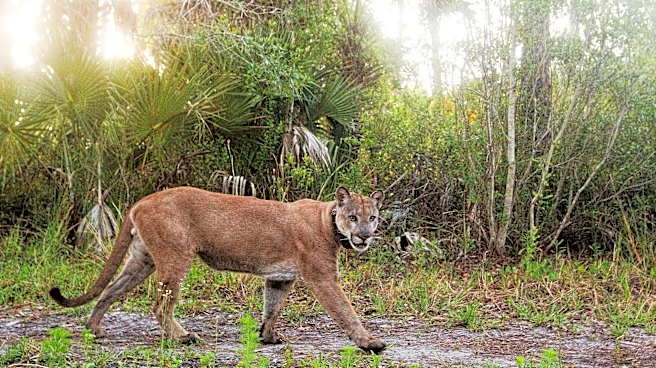
“Supporting America’s Ranchers” and seeks to increase domestic meat production while lowering consumer costs. The directive instructs bureaus within the Department of the Interior to prioritize the needs of the domestic livestock industry, especially as the national cattle herd is at a 75-year low. Key provisions include identifying new lands for livestock grazing, streamlining the permitting process by requiring full 10-year renewals and using technology to expedite approvals, and utilizing well-managed grazing to reduce wildfire risks and control invasive grasses. Additionally, the order aims to increase transparency by creating a public map of available grazing lands and simplifying the application process. It also mandates a review of policies that restrict ranchers' ability to protect livestock from predators and seeks to improve coordination with the United States Department of Agriculture Forest Service.
Why It's Important?
This order is significant for the U.S. livestock industry and rural economies. By expanding grazing opportunities and streamlining regulations, it aims to bolster domestic meat production, which could help stabilize or lower meat prices for consumers. The focus on rebuilding the national cattle herd, currently at a 75-year low, addresses a critical supply chain issue. For ranchers, the initiative promises greater operational certainty through full 10-year permit renewals and reduced bureaucratic hurdles, potentially making their businesses more sustainable. The emphasis on rangeland health, using grazing as a tool for wildfire prevention and invasive species control, highlights an ecological benefit that could mitigate environmental risks. Furthermore, the directive to review predator protection policies could impact wildlife management and conservation efforts, potentially leading to changes in how ranchers interact with wildlife on federal lands. The increased coordination between federal agencies is intended to create a more consistent and efficient regulatory environment for land use.
What's Next?
The order establishes immediate next steps for the Department of the Interior bureaus. An agency lead for the initiative will be appointed, and deadlines have been set for bureaus to report progress and implement changes. Specifically, there is a 30-day deadline to identify new lands for potential grazing and a 60-day deadline for the Bureau of Land Management to present a plan to eliminate its permit renewal backlog. Ranchers can anticipate a more streamlined application process and potentially more available land for grazing in the near future. Stakeholders, including environmental groups and conservationists, will likely monitor the implementation of these changes, particularly regarding their impact on rangeland health and wildlife. The success of this initiative will depend on the effective coordination between various federal agencies and the adoption of new technologies to manage grazing permits efficiently.
Beyond the Headlines
Beyond the immediate economic and operational impacts, this order touches upon broader themes of federal land management and the balance between economic activity and environmental stewardship. The directive to prioritize the domestic livestock industry reflects a policy shift towards maximizing resource utilization on federal lands, potentially reigniting debates over public land access and usage. The use of 'super intelligence' and other new technologies to eliminate permit backlogs suggests a move towards modernizing government processes, which could set a precedent for other federal agencies. The order's emphasis on 'restoring the promise of our working landscapes' and 'reinvigorating rural economies' underscores a philosophical approach to land management that views economic activity as integral to the health and sustainability of rural communities. This initiative could also influence future policy discussions regarding the role of federal lands in supporting national food security and economic resilience.