
What's Happening?
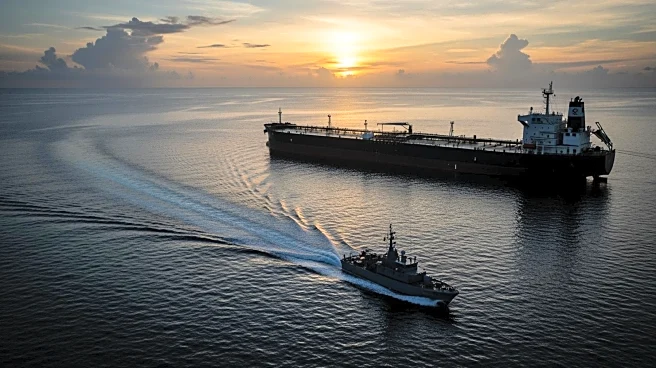
U.S. forces have initiated a maritime 'quarantine' around Venezuela, deploying warships, aircraft, and Marines in the Caribbean as part of President Trump's strategy to enforce sanctions on Venezuelan oil shipments. This operation, which involves approximately
15,000 personnel, aims to interdict tankers and restrict oil exports to pressure Venezuelan President Nicolás Maduro's government. The U.S. administration has not labeled this action as a blockade but intends to stop ships and inspect cargo to prevent sanctioned fuel from traversing the waters. The operation is part of a broader effort to cut off revenue streams that the U.S. claims fund corruption networks tied to Maduro. The Venezuelan government has condemned these actions as illegal interference and piracy.
Why It's Important?
This aggressive maritime enforcement marks one of the most expansive actions of President Trump's administration, highlighting the U.S.'s commitment to applying pressure on the Maduro regime. The operation could significantly impact the Venezuelan economy, which heavily relies on oil exports. By targeting these shipments, the U.S. aims to weaken Maduro's hold on power. However, this move risks escalating tensions between the U.S. and Venezuela, potentially leading to diplomatic and military confrontations. The enforcement also signals a shift in U.S. maritime strategy, potentially setting a precedent for future operations aimed at enforcing international sanctions.
What's Next?
The U.S. military's presence in the Caribbean is expected to continue as part of this enforcement strategy. The situation remains tense, with both U.S. and Venezuelan forces on high alert. The U.S. may face diplomatic challenges from other countries in the region, such as Brazil and Mexico, which might seek alternative arrangements to bypass the sanctions. Additionally, the U.S. administration's plans for a naval expansion could further influence its maritime strategy, potentially leading to increased military presence and operations in international waters.
Beyond the Headlines
The enforcement of this maritime quarantine raises questions about the legality and ethical implications of such actions under international law. The U.S.'s approach could be seen as a test of its ability to project power and influence through maritime operations. This situation also highlights the complex interplay between sanctions, sovereignty claims, and international maritime law, which could have long-term implications for U.S. foreign policy and its relationships with other nations.