



What's Happening?
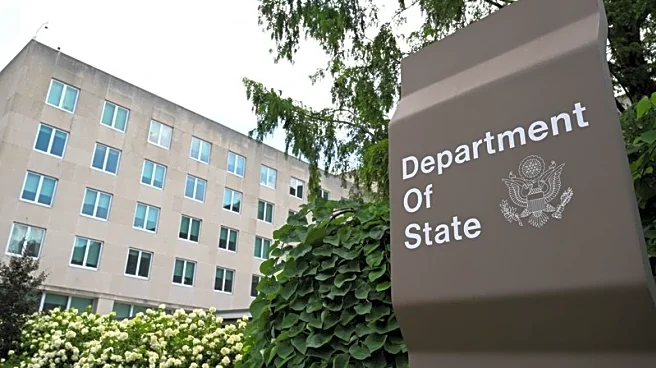
The U.S. Department of Education (ED) has announced new partnerships with the Department of Health and Human Services (HHS) and the Department of State to improve the management of certain educational programs. This initiative aims to streamline federal
education activities, reduce administrative burdens, and enhance program delivery. HHS will take on a larger role in managing programs such as the School Emergency Response to Violence (Project SERV) and Full-Service Community Schools, leveraging its expertise in crisis response. Meanwhile, the State Department will assist in managing the Section 117 foreign gift reporting portal, enhancing transparency and security in higher education funding. These partnerships are part of a broader effort to decentralize federal education bureaucracy and return more control to the states.
Why It's Important?
This development is significant as it represents a strategic shift in how federal education programs are managed, potentially leading to more efficient use of resources and improved safety in schools. By involving HHS, the initiative taps into the department's crisis management capabilities, which could enhance the safety and security of educational institutions. The State Department's involvement in foreign gift reporting aims to protect national security interests by ensuring transparency in foreign funding of U.S. higher education institutions. These changes could lead to better accountability and security, benefiting students, educators, and taxpayers by ensuring that educational programs are effectively managed and aligned with national interests.
What's Next?
The partnerships are expected to lead to a more integrated approach to managing educational programs, with HHS and the State Department playing key roles in their respective areas. The focus will be on implementing these changes smoothly and ensuring that the transition does not disrupt existing programs. Stakeholders, including educational institutions and state governments, will likely monitor the impact of these partnerships closely. The success of this initiative could pave the way for further decentralization of federal education management, potentially influencing future policy decisions.