








What's Happening?
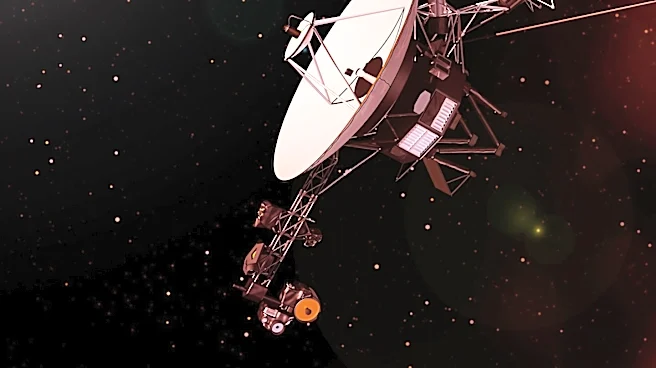
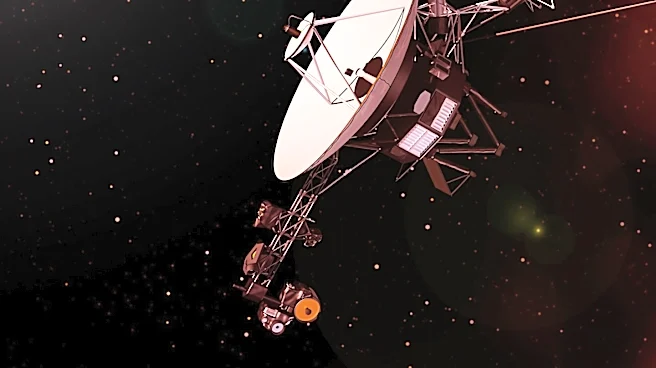
NASA is actively managing the Voyager 1 spacecraft, which has been in space for nearly 50 years, by strategically turning off instruments and heaters to conserve power. The spacecraft, which is the most distant human-made object, relies on a radioisotope
thermoelectric generator that loses about four watts of power annually. As a result, NASA engineers have been forced to shut down several of its instruments, with only two remaining operational. The critical challenge is to prevent the spacecraft from becoming too cold, which could freeze its fuel lines and disable the thrusters that keep its antenna aimed at Earth. This delicate balance is crucial to maintaining communication with Voyager 1, which is over 25 billion kilometers away.
Why It's Important?
The ongoing efforts to sustain Voyager 1 highlight the challenges of long-term space missions and the ingenuity required to manage aging technology. The spacecraft's ability to continue sending data from interstellar space is invaluable for scientific research, providing insights into the outer reaches of our solar system. The mission underscores the importance of strategic resource management in space exploration, as engineers must prioritize which instruments to keep operational to maximize the scientific return. The potential loss of communication with Voyager 1 would mean the end of a significant chapter in space exploration, as it has been a source of groundbreaking data since its launch.
What's Next?
NASA's team will continue to monitor Voyager 1's power levels and make decisions on which systems to deactivate next. The goal is to keep at least one instrument operational into the 2030s, allowing the spacecraft to continue contributing to our understanding of interstellar space. Engineers will also remain vigilant for any signs of fuel line issues, as maintaining the thrusters' functionality is critical to keeping the antenna aligned with Earth. The mission's success depends on the careful balance between conserving power and preventing the spacecraft from becoming too cold.