






What's Happening?
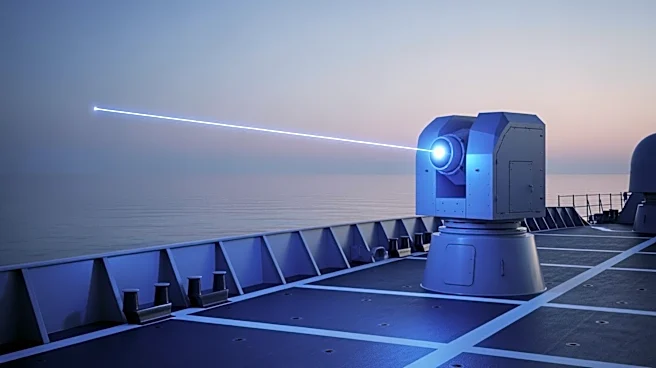
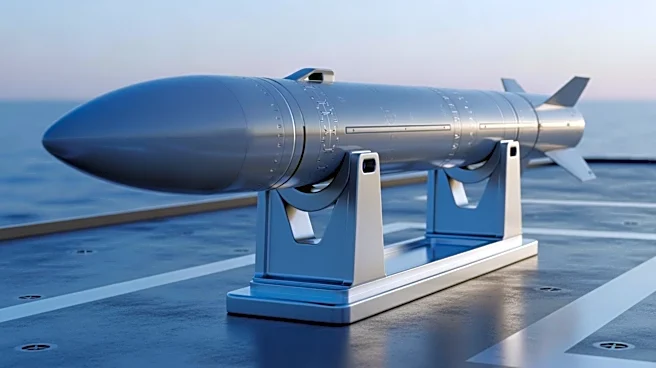
AeroVironment has announced the successful completion of naval trials for its Locust laser weapon system, designed to counter drone threats. The trials took place on the USS George H.W. Bush aircraft carrier, where the system was deployed in a palletized
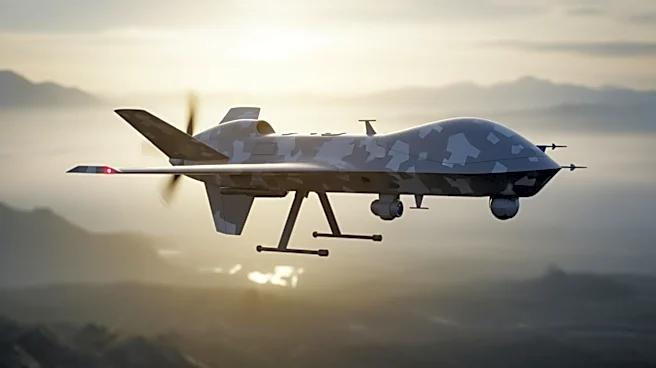
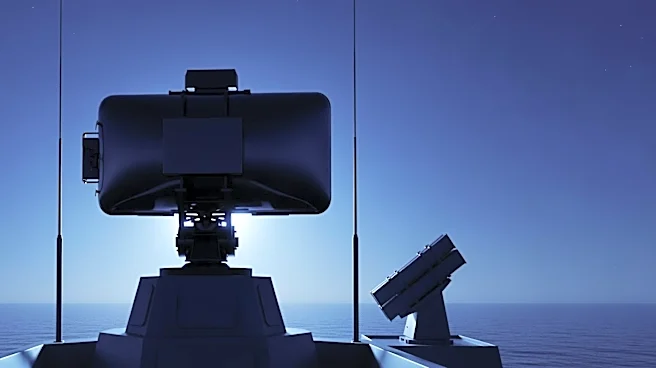
form. During the trials, the Locust laser weapon tracked, engaged, and neutralized multiple drone targets. This development is part of a collaboration with the U.S. Navy and the U.S. Army Rapid Capabilities and Critical Technologies Office. The trials aimed to validate the system's effectiveness in a maritime environment, which presents unique challenges due to the movement of the vessel. AeroVironment is focusing on providing low-cost-per-kill solutions to address the increasing threat of drone and drone-swarm attacks, particularly in regions like the Middle East.
Why It's Important?
The successful trials of the Locust laser weapon system highlight a significant advancement in counter-drone technology, which is becoming increasingly important for national security. As drone technology becomes more accessible, the threat of drone attacks on military and civilian targets grows. AeroVironment's system offers a cost-effective solution to neutralize these threats, potentially saving lives and resources. The ability to deploy such systems on naval vessels without extensive modifications could enhance the U.S. Navy's operational capabilities and readiness. This development also positions AeroVironment as a key player in the defense industry, potentially leading to further contracts and collaborations with the Pentagon and other defense agencies.
What's Next?
Following the successful trials, AeroVironment plans to expand the use of its high-energy laser systems across the U.S. Navy fleet. The company is also looking to scale up its technology to combat higher-end threats, with an eye on the Pentagon's Golden Dome system. This could involve developing more powerful laser systems capable of addressing a wider range of aerial threats. The continued collaboration with the U.S. military suggests that further testing and deployment of these systems could occur, potentially leading to broader adoption across different branches of the armed forces.