






What's Happening?
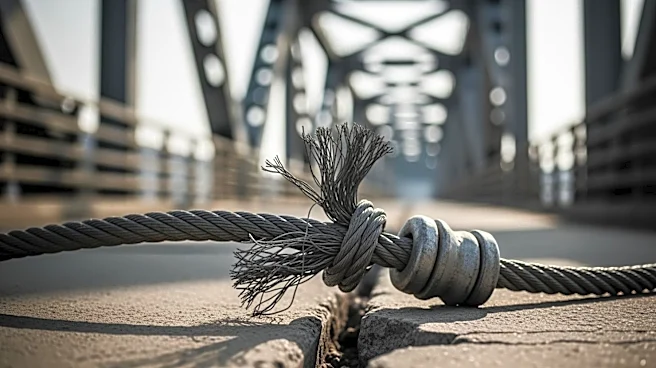
A federal judge has postponed a civil trial concerning the 2024 collapse of Baltimore's Francis Scott Key Bridge. This decision follows a series of last-minute settlements that resolved most of the outstanding claims, including those related to the deaths
of six construction workers. These workers were involved in pothole repairs when a container ship, the Dali, lost power and collided with the bridge. The trial, initially set to begin with opening statements, has been delayed indefinitely to allow for further legal discussions that might lead to additional settlements. The unresolved claims primarily involve economic losses claimed by businesses and local governments. The city of Baltimore, among others, has requested the trial's delay. The judge expressed frustration over the timing of the settlements but acknowledged that such developments are common in civil cases.
Why It's Important?
The delay in the trial and the settlements reached are significant as they highlight the complexities involved in large-scale infrastructure litigation. The settlements may prevent a lengthy and costly trial, potentially saving resources for both the court and the involved parties. The case also underscores the legal and financial ramifications of infrastructure failures, which can have widespread economic impacts on local governments and businesses. The involvement of international companies, such as Synergy Marine and Grace Ocean Private Limited, further complicates the legal landscape, illustrating the global nature of maritime and infrastructure-related incidents.
What's Next?
The indefinite postponement of the trial suggests that further settlements may be reached, potentially resolving the remaining claims without a trial. Legal arguments will continue to be considered, and the outcome could influence future infrastructure-related litigation. The criminal charges against the companies involved in the Dali incident remain pending, and their resolution could impact the civil proceedings. Stakeholders, including the city of Baltimore and affected businesses, will likely continue to seek compensation for their losses.