

What's Happening?
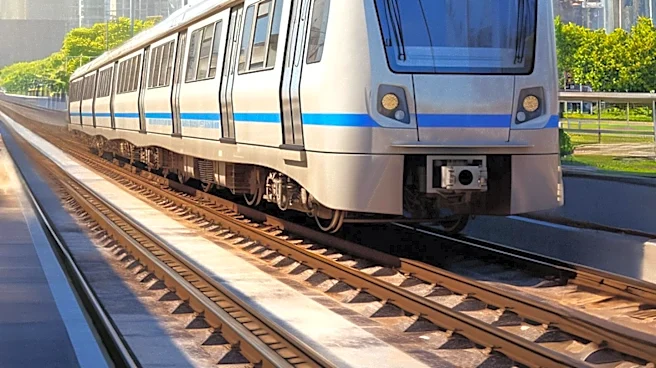
The Regional Transit Authority of Southeast Michigan (RTA) has expressed support for Sterling Heights' initiative to study the conversion of the Contrail north-south freight line into a passenger rail network. Sterling Heights city officials announced
their plan to explore using the existing freight line, currently transporting auto and industrial parts, to connect Macomb County residents to jobs, downtown sports and entertainment venues, and destinations served by Amtrak. Preliminary discussions are anticipated to involve officials from Warren, Detroit, Macomb County, Conrail, the Michigan Department of Transportation, SMART, and Amtrak. Ben Stupka, RTA executive director, stated that the RTA appreciates Sterling Heights' proactive approach and willingness to engage regional partners early in the discussion. City Manager Mark Vanderpool emphasized the importance of preserving the corridor to maintain future transportation options, noting that losing segments of the line would make future passenger rail development much more difficult.
Why It's Important?
This proposal is significant for regional transportation infrastructure and economic development in Southeast Michigan. The potential conversion of a freight line to passenger service could dramatically improve connectivity for Macomb County residents, offering new access to employment centers, cultural attractions, and broader regional and national rail networks. This initiative addresses a critical need for enhanced public transit options in a region where two of Michigan's largest cities, Warren and Sterling Heights, currently lack direct passenger rail access. Improved transit can reduce traffic congestion, lower commuting costs, and stimulate economic growth by making areas more accessible for both residents and businesses. The RTA's support lends credibility and momentum to the project, indicating a collaborative regional effort to address long-term transportation needs and potentially attract federal and state funding for a feasibility study.
What's Next?
The concept remains in its early stages, with no approved project, station locations, funding commitments, or construction schedule. The immediate next step involves preliminary discussions among all identified stakeholders, including city officials, county representatives, and various transportation agencies. Sterling Heights city employee Nahro Matti's 'white paper' on the issue recommends preserving the remaining corridor and conducting a professional feasibility study. This study would evaluate passenger demand, track conditions, coordination with freight operations, potential station locations (such as near M-59 and the General Motors Technical Center), safety, costs, and funding options. Public input would also be a crucial component of evaluating any future passenger rail proposal. The goal is to determine regional interest and support for such a study, which would then inform any subsequent steps towards project development and implementation.
Beyond the Headlines
The push for passenger rail in Sterling Heights highlights a broader national trend of re-evaluating and repurposing existing infrastructure for modern transportation needs. The concern about losing segments of the Conrail line, as noted by Matti, underscores the critical importance of preserving transportation corridors for future development, even if immediate plans are not fully formed. This initiative also touches upon the equity of access, as smaller Michigan communities currently have Amtrak connections while larger cities like Warren and Sterling Heights do not. The project could serve as a model for how suburban areas can integrate into larger regional transit systems, fostering more sustainable and interconnected urban planning. The collaboration required among multiple governmental and private entities (Conrail, Amtrak) also exemplifies the complex inter-jurisdictional cooperation necessary for large-scale infrastructure projects in the U.S.