


What's Happening?
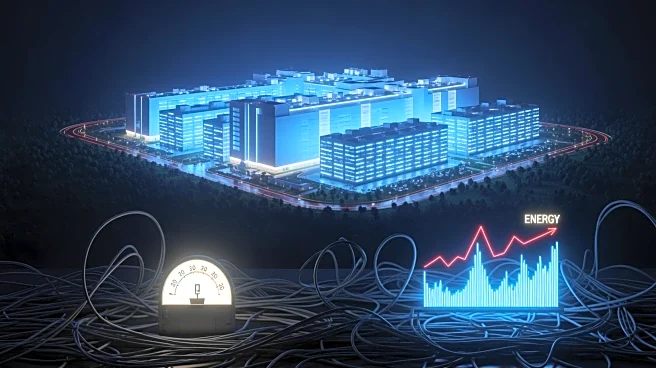
Protests against the construction of AI data centers are emerging across the United States, with citizens expressing concerns over high energy costs associated with these facilities. The protests have gained traction in states like Virginia, Pennsylvania,
and North Carolina, where residents are pushing back against new data center proposals. The issue has transcended traditional political lines, with both Democratic and Republican leaders addressing the concerns. President Trump and a bipartisan group of governors have urged PJM, a major electricity grid operator, to lower energy costs. Meanwhile, technology companies like OpenAI and Microsoft are taking steps to address public concerns by announcing efforts to reduce energy consumption.
Why It's Important?
The protests against AI data centers underscore a growing public concern over the environmental and economic impact of technology infrastructure. As AI continues to expand, the demand for data centers increases, leading to higher energy consumption and costs. This has become a significant issue for voters, influencing political discourse and policy decisions. The bipartisan nature of the protests indicates a shift in how technology and energy issues are perceived, with potential implications for future regulatory approaches. The situation highlights the need for balancing technological advancement with sustainable practices and community interests.
What's Next?
The ongoing protests and political discussions suggest that the issue of AI data centers and energy costs will remain a focal point in upcoming elections and policy debates. Lawmakers may consider new regulations or incentives to address public concerns and promote sustainable practices in the tech industry. The response from technology companies will also be crucial, as they navigate public relations and operational challenges. The outcome of these discussions could shape the future of AI infrastructure development and its integration into communities across the country.