




What's Happening?
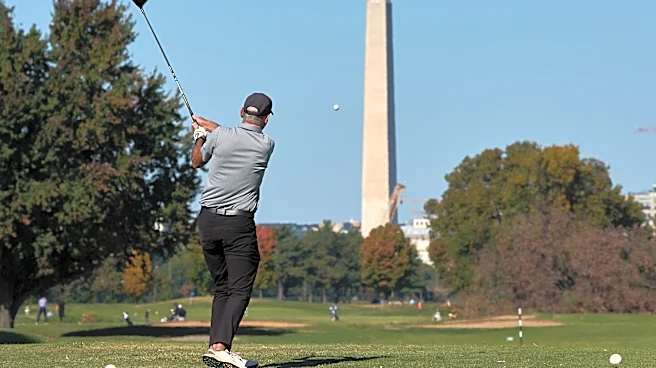
A federal judge has initiated a formal inquiry into potential misconduct by Trump administration officials in a lawsuit concerning the East Potomac Park municipal golf course in Washington, D.C. District Judge Ana Reyes ordered a hearing to seek clarity
from government lawyers after they acknowledged a plan to transform the municipal golf course into a championship-level venue, which would involve closing the course and much of the surrounding park in mid-November. For months, Justice Department attorneys, representing the Interior Department and National Park Service, had maintained that such a plan was not final, despite President Trump's social media statements to the contrary. Judge Reyes expressed skepticism regarding the government's claims, particularly after their recent confirmation of the plan and the submission of renovation plans to the National Capital Planning Commission. The judge questioned why this information was not disclosed earlier in the litigation, especially given previous hearings where government lawyers stated they were unaware of such plans. The inquiry will investigate whether agency officials and attorneys made misrepresentations to the court and violated ethical rules.
Why It's Important?
This judicial inquiry into potential misconduct by Justice Department attorneys and Trump administration officials carries significant implications for the integrity of government legal representation and the separation of powers. The judge's decision to investigate whether false statements were made to the court directly challenges the credibility of government lawyers and the information provided by federal agencies. This could set a precedent for increased judicial scrutiny of government litigation practices, particularly in cases involving high-profile political figures. The case also highlights the tension between presidential directives and the legal obligations of government agencies, raising questions about transparency and accountability within the executive branch. If misconduct is found, it could lead to disciplinary actions against the involved attorneys and officials, further eroding public trust in government institutions. Moreover, the dispute over the East Potomac Park golf course, a public park designated for recreation since 1897, underscores broader concerns about the use of public lands and the potential for private interests to influence public policy decisions.
What's Next?
Judge Reyes announced that the inquiry into potential misconduct may be led by a special master with full investigatory powers. If the government rejects the special master, the judge stated she would conduct the inquiry herself. This investigation will likely involve a thorough review of documents and testimonies to determine if any misrepresentations were made to the court. The judge has also ordered government officials to preserve all relevant documents to prevent the loss of evidence. Concurrently, the Trump administration has appealed Reyes's ban on further tree removal and her requirement for 10 days' written notice before closing or irreversibly modifying East Potomac Park. The National Links Trust, which operates the golf course, has confirmed it will cease operations at East Potomac on or before November 15, under a new lease agreement. The administration also cites the need for seawall repairs, estimated to cost between $150 million and $400 million, as a reason for the park's closure, regardless of golf course renovations. Representative Jared Huffman has sent a letter to appropriations leaders, urging them to block federal money for the seawall project if it is intended to advance the golf course renovations.
Beyond the Headlines
The legal battle over East Potomac Park transcends a simple land-use dispute, delving into fundamental questions about the role of the judiciary in holding the executive branch accountable. Judge Reyes's assertion, 'Rarely, if ever, has the United States Department of Justice urged a federal court not to believe the sitting president,' highlights a profound challenge to the traditional deference given to presidential statements and government representations in court. This case could redefine the boundaries of executive privilege and the ethical obligations of government lawyers when faced with conflicting public statements from the president. The broader implications include the potential for increased judicial activism in scrutinizing executive actions, particularly when those actions appear to contradict previous government assurances. Furthermore, the controversy over renovating a public park for a championship-level golf course, potentially at taxpayer expense, raises ethical concerns about the prioritization of private interests over public access and environmental preservation. This could ignite public debate on the stewardship of national parks and the influence of political figures on their management.