



What's Happening?
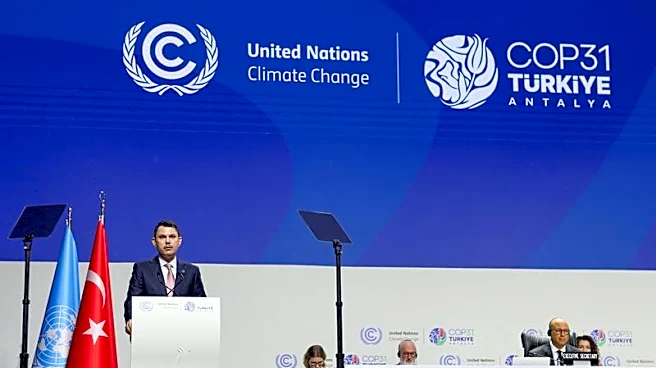
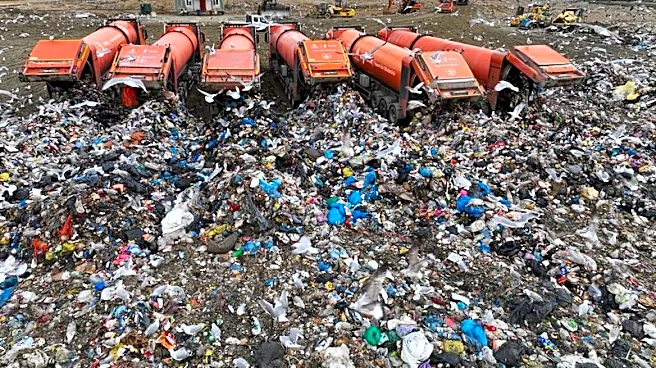
The Environmental Justice Foundation (EJF) is advocating for significant action on plastics at COP31, emphasizing the plastics industry's growing contribution to climate change. According to the EJF, the plastics sector currently accounts for 4-5% of
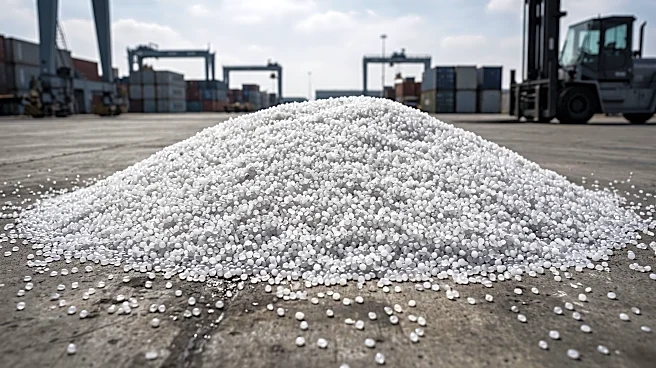
global emissions, primarily during the production process. Projections indicate that by 2040, if the global plastics system were a country, it would be the third-largest greenhouse gas emitter worldwide, trailing only China and the United States. Major fossil fuel companies are increasingly viewing plastics as a growth strategy as renewable energy sources displace their traditional fuels. The EJF is urging for the inclusion of binding targets to reduce plastic production and consumption as a central component of countries' climate commitments and calls for the exclusion of fossil fuel and petrochemical interests from COP31 discussions.
Why It's Important?
The EJF's call highlights a critical environmental and economic challenge for the U.S. and global stakeholders. The U.S. is identified as one of the top two greenhouse gas emitters, and the plastics industry's projected growth in emissions directly impacts national climate goals and international environmental agreements. For U.S. industries, particularly those in the petrochemical and manufacturing sectors, binding targets on plastic production could necessitate significant operational shifts, investments in sustainable alternatives, and potentially impact profitability. Conversely, businesses focused on recycling, circular economy solutions, and renewable materials stand to gain from such policy changes. The emphasis on keeping fossil fuel interests out of COP31 also underscores a broader struggle over the future of energy and industrial policy, with potential implications for U.S. energy companies and their lobbying efforts.
What's Next?
As COP31 approaches, the EJF and similar environmental organizations will likely intensify their advocacy for concrete policy changes regarding plastic production and consumption. The discussions at COP31 will determine the extent to which these calls are integrated into international climate commitments. Should binding targets be adopted, U.S. policymakers would face pressure to implement national regulations aligning with these goals, potentially through legislation or executive actions. This could lead to increased scrutiny of the plastics industry, incentives for innovation in sustainable materials, and potentially new trade policies related to plastic products. The outcome will also influence the investment landscape, with capital potentially shifting away from traditional plastic production towards more environmentally friendly alternatives.
Beyond the Headlines
The debate over plastic production extends beyond immediate environmental concerns, touching upon broader issues of corporate responsibility, consumer behavior, and global equity. The EJF's stance challenges the prevailing economic model that prioritizes continuous growth in fossil fuel-derived products. It also raises ethical questions about the disproportionate impact of plastic pollution and climate change on vulnerable communities, both domestically and internationally. The push for binding targets could catalyze a fundamental re-evaluation of material science and industrial design, fostering a transition towards a truly circular economy. This shift would not only mitigate environmental damage but also redefine the relationship between industry, government, and civil society in addressing complex global challenges.