





What's Happening?
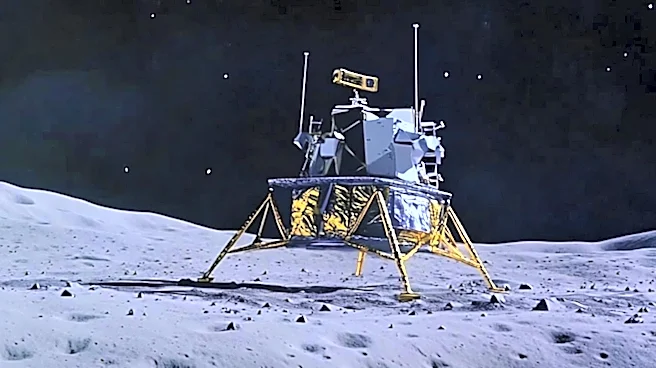
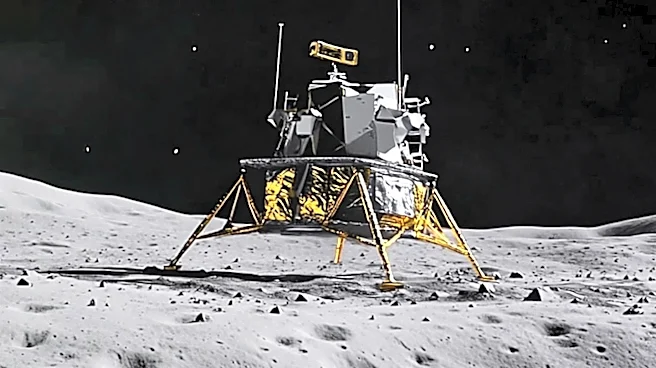
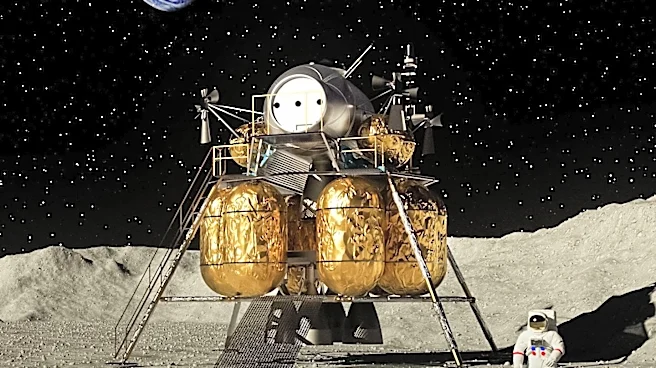
Victor Glover, an astronaut from the Artemis II mission, has suggested that NASA should consider equatorial regions for initial lunar landings instead of the challenging lunar south pole. Speaking at the NASA Exploration Science Forum, Glover emphasized
the benefits of landing in known, well-lit equatorial areas, which were used during the Apollo missions. He highlighted the logistical challenges and risks associated with the south pole, such as long shadows and difficult terrain. Glover's comments align with previous suggestions from NASA officials to explore alternative landing sites, aiming to build experience before attempting more complex polar landings.
Why It's Important?
Glover's advocacy for equatorial landings reflects a strategic approach to lunar exploration, prioritizing safety and feasibility. By starting with less challenging sites, NASA can gain valuable experience and reduce risks associated with lunar missions. This approach could accelerate the timeline for successful landings and ensure the safety of astronauts. The discussion also underscores the importance of flexibility in mission planning, allowing NASA to adapt to technological and logistical constraints while maintaining progress toward its long-term goals of lunar exploration and eventual Mars missions.
What's Next?
NASA is expected to continue evaluating potential landing sites for upcoming Artemis missions, balancing the scientific value of polar regions with the practical benefits of equatorial sites. The agency's decision will likely influence the design and capabilities of lunar landers and other mission components. As NASA prepares for Artemis III and beyond, the choice of landing sites will play a crucial role in shaping the future of human space exploration. Ongoing discussions and assessments will inform the final mission plans, with input from astronauts, scientists, and engineers.