

What's Happening?
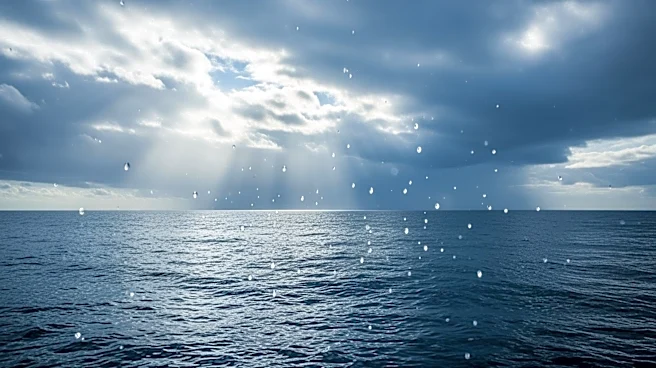
The Southern Ocean is experiencing increased rainfall as climate change intensifies, according to a new study. The research, focusing on Macquarie Island between Tasmania and Antarctica, shows a 28% rise in annual rainfall since 1979. This increase is attributed
to more intense storms rather than a higher frequency of storms. The island's environment is visibly changing, with expanding boggy terrain and declining native plant species. The study, published in 'Weather and Climate Dynamics', highlights that the Southern Ocean storm track has shifted closer to Antarctica, affecting rainfall patterns. The findings reveal a discrepancy between observed data and climate models, with actual rainfall increases outpacing model predictions.
Why It's Important?
The increased rainfall in the Southern Ocean has significant implications for global climate systems. More freshwater entering the ocean's surface can reduce mixing between water layers, affecting ocean currents and potentially disrupting the movement of carbon and nutrients. This could impact one of the world's largest natural carbon sinks. The study estimates that by 2023, the additional rainfall may have added about 2,300 gigatonnes of freshwater annually across the high-latitude Southern Ocean. The findings suggest that the Southern Ocean is losing more heat to the atmosphere, similar to how sweat cools the human body, which could have broader climate implications.
Beyond the Headlines
The study's findings serve as a warning about the potential global impacts of climate change on oceanic systems. The increased evaporation and rainfall in the Southern Ocean could lead to changes in ocean salinity, affecting marine ecosystems and global weather patterns. The research underscores the importance of understanding regional climate changes and their potential effects on global systems. Further research is needed to determine the extent of these changes across the Southern Ocean and their implications for future climate scenarios.