



What's Happening?
Tarleton State University has received a significant donation from Petroleum Experts Limited (Petex), consisting of 10 educational licenses for its MOVE suite software. This gift, valued at $2.76 million, is set to enhance learning and research opportunities
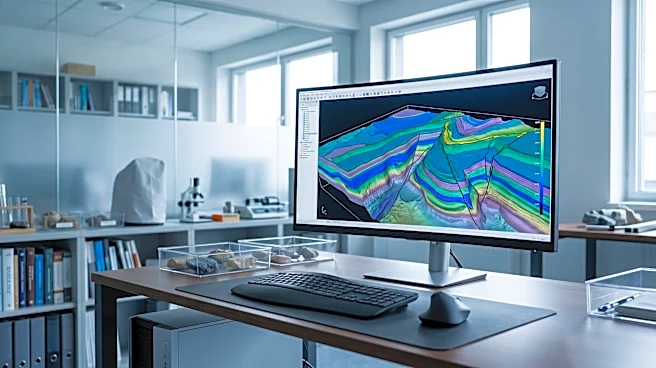
for students and faculty within the geoscience department and the Mayfield College of Engineering. The MOVE suite is a comprehensive collection of structural geology and petroleum engineering tools widely utilized in both academic and industrial settings. It includes 11 integrated products that offer capabilities in structural geology, geomechanical modeling, fracture analysis, and petroleum system evaluation. Graduate students in master’s and doctoral programs will integrate this software into their coursework and research, providing them with practical experience using industry-standard tools. Dr. Kevin Johnson, Dean of the College of Science and Mathematics, emphasized the importance of access to such leading-edge technologies for preparing students for successful careers. Similarly, Dr. Rafael Landaeta, Dean of the Mayfield College of Engineering, highlighted how the software will bolster the upcoming petroleum engineering program by providing access to advanced technologies used across the energy industry.
Why It's Important?
This donation is crucial for Tarleton State University as it directly addresses the need for hands-on experience with advanced technological tools in specialized fields like geoscience and petroleum engineering. By providing students with access to the MOVE suite, the university is equipping its graduates with industry-relevant technical skills, making them more competitive in the workforce. This initiative strengthens the curriculum by allowing students to apply theoretical classroom concepts to sophisticated modeling and analytical tasks. For the Mayfield College of Engineering, the timing is particularly significant as it prepares to launch its petroleum engineering program, ensuring that students will be trained with the same advanced technologies prevalent in the energy sector. This practical exposure is vital for students to lead and innovate from the start of their careers, bridging the gap between academic learning and professional demands. The gift also elevates the university's research capabilities, fostering deeper exploration and analysis in these critical scientific and engineering disciplines.
What's Next?
The immediate next step for Tarleton State University will involve integrating the MOVE suite into the curricula of its geoscience programs and the newly launching petroleum engineering program. Faculty will likely undergo training to maximize the software's utility in their courses and research projects. Students, particularly those in master's and doctoral programs, will begin utilizing the software for advanced geological modeling, analysis, and research, gaining practical experience that will be directly applicable to their future careers. The university may also explore opportunities for collaborative research projects with industry partners, leveraging the advanced capabilities of the MOVE suite. This donation is expected to attract more students to these programs, enhancing Tarleton State's reputation as a leading institution for geoscience and engineering education. Furthermore, the university will likely monitor the impact of this software on student outcomes and research output to assess its long-term benefits.
Beyond the Headlines
This generous gift from Petroleum Experts Limited underscores a broader trend of industry-academia collaboration aimed at bridging the skills gap in specialized technical fields. As industries evolve rapidly, universities face the challenge of keeping their curricula current with the latest technologies and practices. Donations of high-value software, like the MOVE suite, are essential for educational institutions to provide students with relevant, real-world experience without incurring prohibitive costs. This collaboration also highlights the energy industry's vested interest in cultivating a highly skilled workforce, ensuring a pipeline of talent equipped with the tools necessary for innovation and problem-solving. Ethically, such partnerships raise questions about the influence of industry on academic curricula, though in this case, the benefit of providing students with cutting-edge tools for their professional development appears to be the primary driver. Long-term, this could lead to more specialized graduates who are immediately productive upon entering the workforce, fostering a more dynamic and responsive educational ecosystem.