





What's Happening?
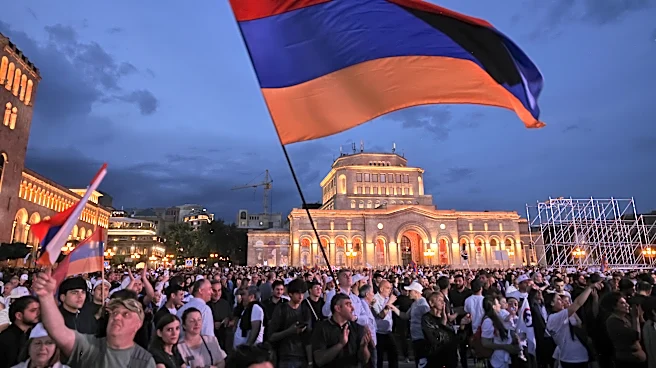
Armenia held a parliamentary election on Sunday, which is seen as a critical test of Prime Minister Nikol Pashinyan's efforts to pivot the country towards the West. This election comes in the wake of Armenia's historical ties with Russia, which have been
strained due to Pashinyan's recent foreign policy shifts. The election follows a period of significant upheaval in Armenia, including the 2018 revolution that brought Pashinyan to power and the recent conflict with Azerbaijan over the Karabakh region. The Prime Minister has been advocating for a balanced foreign policy, aiming to reduce Armenia's reliance on Russia by strengthening ties with the European Union and the United States. This shift has been met with resistance from Moscow, which has expressed concerns over Armenia's EU ambitions, likening them to Ukraine's path that led to conflict with Russia. U.S. President Donald Trump has endorsed Pashinyan, highlighting the geopolitical stakes involved.
Why It's Important?
The outcome of this election is pivotal for Armenia's future foreign policy direction and its relationship with major global powers. A shift towards the West could alter the geopolitical landscape in the Caucasus region, potentially reducing Russian influence. This move could also open up new economic and political opportunities for Armenia through closer ties with the EU and the U.S. However, it risks further straining relations with Russia, which has historically been a key ally and security partner. The election results could also impact regional stability, especially in light of the recent conflict with Azerbaijan. Armenia's decision to pursue EU membership and its participation in Western military exercises have already drawn criticism from Moscow, indicating potential diplomatic tensions ahead.
What's Next?
Following the election, Armenia is expected to continue navigating its complex relationship with Russia while pursuing deeper integration with Western institutions. The election results will likely influence Armenia's foreign policy trajectory, with potential implications for its security and economic partnerships. Observers will be watching for Moscow's reaction to the election outcome, as well as any shifts in Armenia's domestic and foreign policy priorities. The international community, particularly the EU and the U.S., may also respond with increased diplomatic engagement or support, depending on the election's impact on Armenia's geopolitical alignment.