







What's Happening?
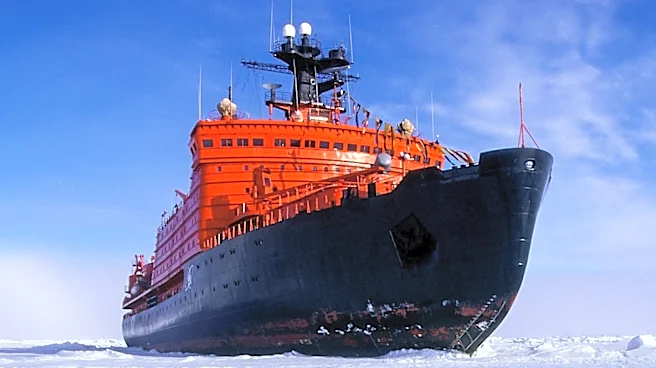
The U.S. Coast Guard's medium icebreaker, Healy, was recently towed to Port Angeles, Washington, following a significant engineering failure during sea trials off the Washington coast. The incident occurred after the Healy had completed extensive drydock
repairs, including a $18.3 million overhaul of its propulsion components. Despite these efforts, the ship lost propulsion and required towing. An investigation is underway to determine the cause of the failure, and the Coast Guard has indicated that major repairs will be necessary. The Healy, a 420-foot vessel, has a history of engine issues, including fires in 2020 and 2024. In the meantime, the Coast Guard has deployed other vessels, such as the icebreaker Storis and the national security Cutter Munro, to patrol the Arctic region.
Why It's Important?
The Healy's engine failure underscores the challenges faced by the U.S. in maintaining a capable icebreaking fleet, crucial for Arctic operations. The incident highlights the need for reliable icebreakers to ensure year-round access to the Arctic, a region of growing strategic importance due to increased foreign interest and activity. The delays in the delivery of new polar security cutters, now expected in 2033, further complicate the situation. The U.S. must address these operational gaps to protect its northern borders and maritime interests. The Healy's issues also reflect broader concerns about the aging infrastructure of the U.S. icebreaking fleet and the urgency of modernizing it to meet current and future demands.
What's Next?
The Coast Guard is expected to provide updates on the Healy's condition and repair timeline as the investigation progresses. Meanwhile, the service is accelerating the acquisition of additional icebreakers, with contracts awarded for five more cutters. This expansion aims to bolster the U.S. presence in the Arctic and address the strategic challenges posed by foreign vessels in the region. The outcome of the Healy's repairs and the timely delivery of new cutters will be critical in shaping the U.S. Arctic strategy and ensuring the Coast Guard's operational readiness.