





What's Happening?
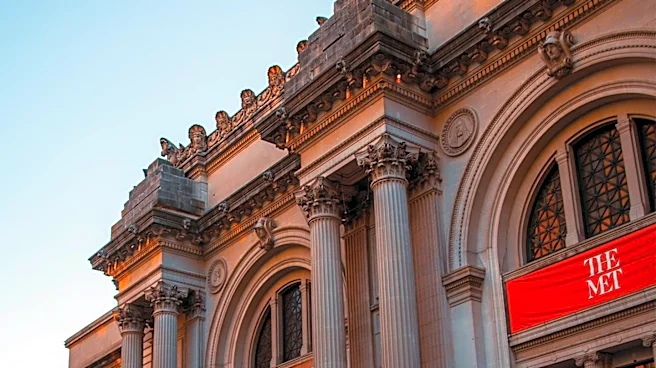
In 2008, a Renaissance glazed terracotta lunette of Saint Michael the Archangel, created by Andrea della Robbia around 1475, fell from its mount at the Metropolitan Museum of Art and shattered. This incident revealed that the sculpture had been previously
broken and repaired during its initial firing in Andrea's workshop in the 1470s, a repair that remained unnoticed for over five centuries. The Met's conservators have since reassembled the Saint Michael sculpture, which is now part of an exhibition featuring fifteen other Della Robbia works. The exhibition, 'Rediscovering Della Robbia at the Met,' also highlights other fascinating discoveries, such as assembly instructions engraved on the back of Andrea della Robbia's 'Prudence' roundel, indicating how its eight sections of fruit and flowers were originally meant to be arranged. Additionally, the exhibition showcases the extensive restoration of 'The Assumption of the Virgin' altarpiece by Andrea della Robbia and his workshop, which was acquired by the Met in 1882 and had spent nearly seventy years in storage.
Why It's Important?
The restoration and exhibition of these Della Robbia sculptures at the Metropolitan Museum of Art are significant for several reasons. Firstly, they offer a unique insight into Renaissance artistic practices, including the resourcefulness of workshops in repairing damaged pieces and the use of early assembly instructions. This provides valuable historical context for understanding the creation and preservation of art from that period. Secondly, the exhibition underscores the enduring legacy of the Della Robbia family, who pioneered glazed terracotta as a durable and expressive medium, making sculpture more accessible and resilient. The detailed conservation efforts, such as the reconstruction of the 'Assumption of the Virgin' altarpiece and the 'nose job' on the 'Head of a youth,' demonstrate advanced techniques in art preservation and the commitment to restoring historical integrity. This work not only brings these masterpieces back to public view but also educates visitors on the intricate processes involved in maintaining cultural heritage.
What's Next?
The 'Rediscovering Della Robbia at the Met' exhibition is currently on display, allowing the public to view the reassembled Saint Michael and other restored works. Future plans for the Met will likely involve continued research into the Della Robbia family's techniques and further conservation efforts on other pieces in their collection. The ongoing display of these works will continue to provide educational opportunities for art enthusiasts and scholars, fostering a deeper appreciation for Renaissance art and the science of art conservation. The museum may also publish more detailed findings from their conservation projects, contributing to the broader academic understanding of art history and material culture. The success of this exhibition could also inspire similar in-depth explorations of other historical art collections, bringing more hidden stories and restoration triumphs to light.
Beyond the Headlines
Beyond the immediate artistic and historical significance, the story of the Della Robbia sculptures at the Met touches upon broader themes of resilience and the human endeavor to create and preserve beauty. The fact that a repair from the 1470s went undetected for centuries highlights the skill of Renaissance artisans and the longevity of their materials. It also prompts reflection on the nature of authenticity in art—how much damage and repair can a piece sustain before its original essence is altered? The use of glazed terracotta, a material that was innovative for its time, speaks to the continuous human drive for technological and artistic advancement. Furthermore, the meticulous work of modern conservators, who act as detectives and surgeons for historical artifacts, underscores the ongoing dialogue between past and present, ensuring that the artistic achievements of previous generations continue to inspire and inform contemporary society. This ongoing preservation effort is crucial for maintaining a tangible link to our cultural heritage.