
What's Happening?
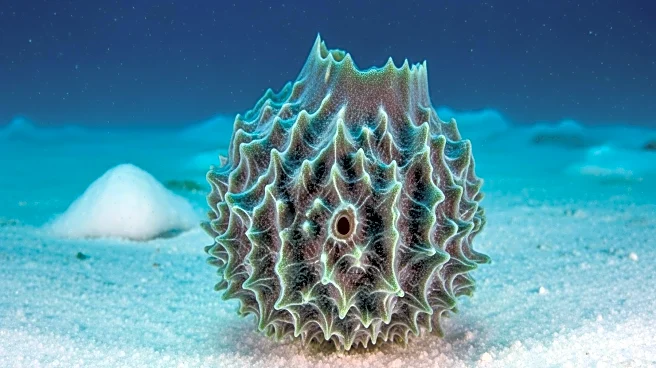
A new species of carnivorous sponge, dubbed the 'death-ball' sponge, has been discovered in the deep sea near Antarctica by the Nippon Foundation–Nekton Ocean Census. These sponges, part of the Chondrocladia
genus, are characterized by their bubble-like appearance and are covered in tiny hooks that capture small prey. The discovery was made using a Remotely Operated Vehicle (ROV) at a depth of 3,601 meters near Montagu Island. This expedition also uncovered other new species, including scale worms and crustaceans, highlighting the rich biodiversity of the Southern Ocean.
Why It's Important?
The discovery of the 'death-ball' sponge and other new species in the Southern Ocean underscores the vast, unexplored biodiversity of deep-sea environments. These findings contribute to our understanding of marine ecosystems and the unique adaptations of organisms living in extreme conditions. The research conducted by the Nippon Foundation–Nekton Ocean Census is crucial for documenting and preserving marine biodiversity, which is increasingly threatened by climate change and human activities. This knowledge can inform conservation efforts and policies aimed at protecting these fragile ecosystems.
What's Next?
Following the discovery, scientists will continue to analyze the collected data to identify and classify the new species. The findings will be curated in an open-access data platform, making them available for further research and study. Ongoing exploration and research in the Southern Ocean are expected to reveal more about the region's biodiversity and ecological significance. These efforts will require collaboration between international research institutions and governments to ensure the protection and sustainable management of marine resources.
Beyond the Headlines
The discovery of new species in the deep sea highlights the importance of scientific exploration in uncovering the mysteries of our planet's oceans. It also raises questions about the impact of human activities, such as deep-sea mining and fishing, on these largely unexplored ecosystems. The ethical considerations of exploiting marine resources must be balanced with the need to preserve biodiversity and maintain ecological balance. Additionally, the role of technology in facilitating deep-sea exploration demonstrates the potential for innovation to advance scientific knowledge and conservation efforts.