




What's Happening?
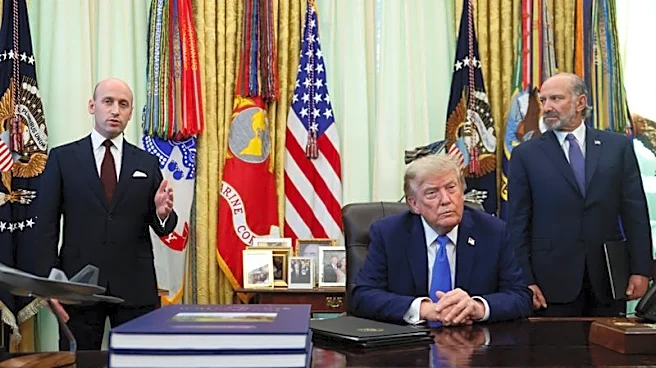
A recent briefing at the Eisenhower Executive Office Building, organized by the White House Faith Office, brought together faith leaders, writers, activists, and policy advocates to discuss the role of moral culture in sustaining the U.S. constitutional
republic. Key figures such as Jennifer Korn, Deputy Assistant to the President, and Pastor Paula White-Cain, Senior Advisor, emphasized the importance of virtue, faith, and moral responsibility in governance. The discussions underscored that while laws and policies are crucial, the moral and spiritual character of citizens is indispensable for the survival of the republic. The event highlighted concerns about the erosion of moral culture and its impact on the nation's future.
Why It's Important?
The emphasis on moral culture by the White House Faith Office reflects a broader philosophical stance that political freedom and effective governance are deeply intertwined with the moral character of the populace. This perspective suggests that without a strong moral foundation, the constitutional mechanisms alone may not suffice to preserve liberty. The discussions resonate with historical views from the Founding Fathers, who believed that self-governance requires virtuous citizens. The focus on moral culture could influence public policy and civic engagement, potentially affecting how future generations perceive and uphold democratic values.