



What's Happening?
A Sandoval County judge plans to issue a bench warrant for Jevon Martinez, who is accused of vandalizing license plate cameras in Rio Rancho. Martinez appeared in Sandoval County District Court to face charges of larceny, criminal damage to property,
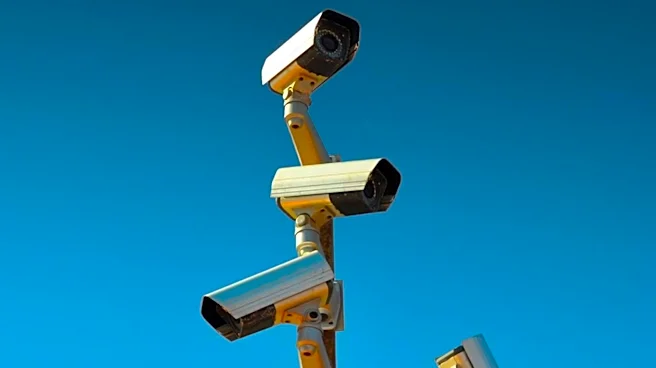
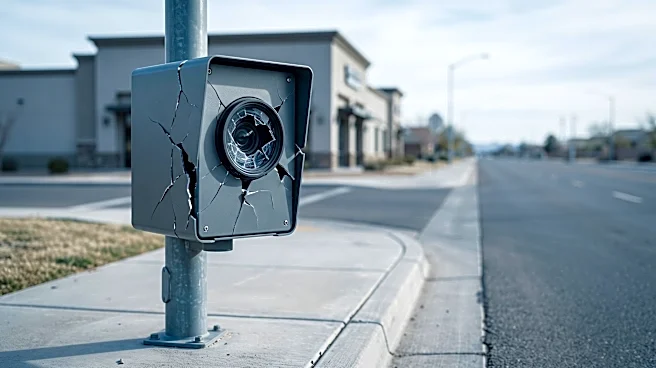
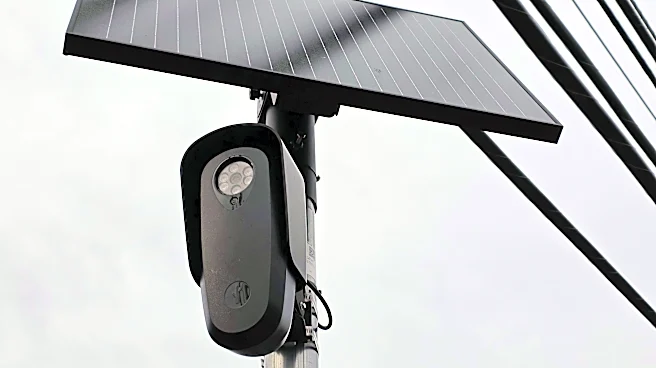
and tampering with evidence. During the court proceedings, Martinez challenged the court's authority, stating he was making a 'special appearance, not a general appearance,' and argued that his court-appointed attorney, Pamala Sullivan, could not speak on his behalf without his permission. Judge Christopher Perez warned Martinez that leaving the courtroom would result in a failure-to-appear warrant. Despite this warning, Martinez left the courtroom before his arraignment could be completed. Police allege that Martinez destroyed three Flock license plate reader cameras in Rio Rancho earlier this year, replacing them with a sign that read, 'You’re welcome, Republic of New Mexico.' As of Monday, court records indicated the warrant had not yet been formally filed.
Why It's Important?
This incident highlights challenges within the judicial system when defendants dispute court authority and legal representation. The alleged vandalism of license plate reader cameras, which are often used by law enforcement for public safety and crime prevention, raises questions about the balance between surveillance technology and individual rights. The suspect's actions, including replacing the cameras with a sign referencing a 'Republic of New Mexico,' could suggest a broader anti-government or anti-surveillance sentiment, potentially influencing public discourse on these technologies. The judge's decision to issue a bench warrant underscores the court's commitment to maintaining order and ensuring legal processes are followed, even when faced with defiance. This case could set a precedent for how similar acts of defiance or challenges to court authority are handled in Sandoval County and potentially beyond.
What's Next?
Judge Perez has stated that a bench warrant will be issued for Jevon Martinez's arrest. Following the issuance of the warrant, another hearing will be scheduled to determine whether Martinez can legally represent himself in the case. This subsequent hearing will be crucial in establishing the legal parameters for self-representation in Sandoval County courts, especially in cases where defendants challenge the court's jurisdiction. Law enforcement will likely be tasked with locating and apprehending Martinez based on the bench warrant. The outcome of this case could influence future policies regarding the deployment and protection of surveillance technologies like license plate readers, as well as how courts address defendants who refuse to acknowledge their authority or legal counsel.
Beyond the Headlines
The incident touches upon deeper societal debates concerning privacy, government surveillance, and individual autonomy. The act of replacing surveillance cameras with a politically charged message suggests a deliberate challenge to state authority and the perceived overreach of technology in public spaces. This case could become a focal point for discussions on civil liberties and the extent to which citizens can protest or interfere with government-installed infrastructure. It also brings to light the complexities of legal representation, particularly when a defendant rejects appointed counsel and attempts to assert unconventional legal arguments. The court's handling of Martinez's claims of 'special appearance' versus 'general appearance' could have implications for how similar sovereign citizen-type arguments are addressed in the future, potentially influencing legal education and judicial training on such matters.