




What's Happening?
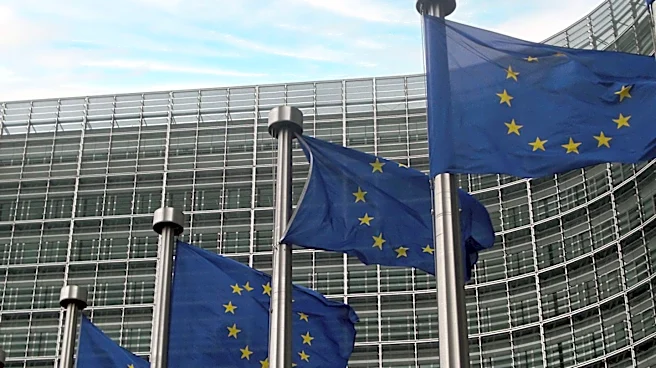
France has joined Slovakia in requesting the removal of Russian-Uzbek billionaire Alisher Usmanov from the European Union's sanctions list. This move has prevented the EU from unanimously agreeing to extend individual sanctions, which are set to expire
on September 15. According to Euronews, citing EU diplomats, France justified its position by citing an unspecified 'national security issue' and a request from 'international partners,' without disclosing further details. Usmanov, a 73-year-old billionaire with an estimated net worth of $14 billion to $18 billion, made his fortune in metals, mining, telecommunications, and technology investments. The EU imposed sanctions on him on February 28, 2022, describing him as a 'pro-Kremlin oligarch' with 'particularly close ties' to President Putin, and alleging he acted on behalf of the Russian president in matters of political and strategic significance. Italy and Croatia have also reportedly supported France and Slovakia's stance as a compromise to secure the extension of the EU's broader individual sanctions regime.
Why It's Important?
This development is significant for U.S. foreign policy and international relations, as it highlights potential cracks in the unified Western front against Russia. The EU's inability to maintain unanimous consent on sanctions against a prominent Russian figure could undermine the effectiveness of such measures and send a mixed signal to the Kremlin. For U.S. businesses and economic stakeholders, any weakening of sanctions could alter the landscape of international trade and investment with Russia, potentially creating new opportunities or challenges depending on their sector. The stated 'national security issue' by France, if related to U.S. interests or alliances, could also have broader implications for transatlantic cooperation. Furthermore, the situation raises questions about the long-term sustainability and political will behind international sanctions regimes, which are a key tool in U.S. and allied foreign policy.
What's Next?
The immediate next step involves the EU's decision on whether to extend the individual sanctions, which expire on September 15. Given the opposition from France, Slovakia, Italy, and Croatia, a unanimous agreement to extend sanctions on Alisher Usmanov appears unlikely. This could lead to his removal from the sanctions list, potentially allowing him to regain access to frozen assets and resume business activities in the EU. Such a decision would likely trigger strong reactions from other EU member states and potentially from the U.S., which has consistently advocated for maintaining pressure on Russian oligarchs. The situation could also set a precedent for future discussions on sanctions against other Russian individuals, potentially leading to further fragmentation within the EU's sanctions policy. Stakeholders will be closely watching for any official statements from the EU regarding the outcome of these discussions and any subsequent reactions from the U.S. State Department.
Beyond the Headlines
The push to lift sanctions on Alisher Usmanov delves into the complex interplay between economic interests, national security, and the ethical implications of engaging with individuals linked to authoritarian regimes. Beyond the immediate political and economic consequences, this situation raises deeper questions about the efficacy and moral standing of sanctions as a tool of international diplomacy. If Usmanov is delisted, it could be perceived as a tacit acceptance of his past actions, particularly his alleged role in consolidating the Kremlin's control over Russian media and the internet. This could have long-term cultural and ethical ramifications, potentially normalizing the idea that individuals who aid in suppressing independent information can eventually return to 'business as usual' with Western nations. It also highlights the inherent tension between the desire for a unified international response to geopolitical aggression and the individual national interests that can complicate such unity, potentially eroding trust and cooperation among allies.