



What's Happening?
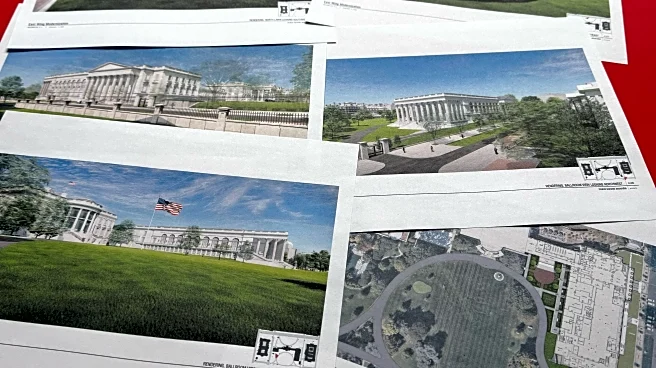
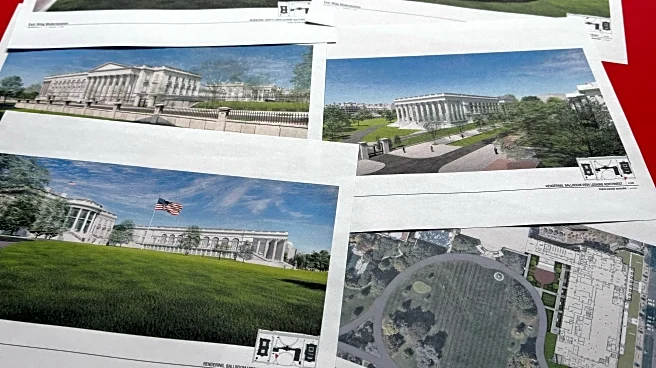
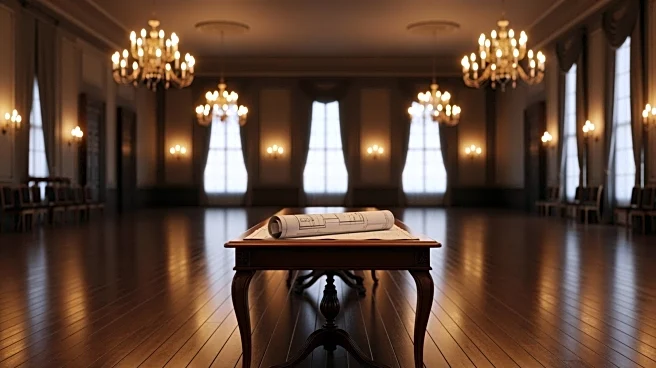
The U.S. Commission of Fine Arts, composed of appointees by President Trump, has approved a proposal to construct a new ballroom at the White House. This ballroom, designed to be larger than the White House itself, is intended to replace the East Wing.
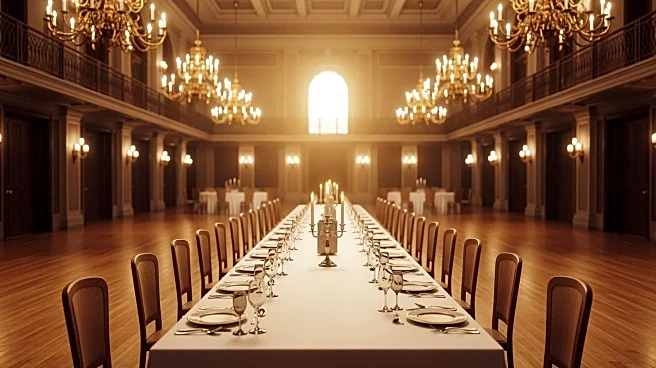
The decision was made during a meeting where the chairman, Rodney Mims Cook Jr., pushed for a final vote, which resulted in approval by six of the seven commissioners. The proposal aims to eliminate the need for temporary structures, referred to as 'tents' by President Trump, used for hosting state dinners and other events. The project has faced criticism for bypassing typical review processes and has led to a lawsuit by the National Trust for Historic Preservation. Further discussions are scheduled with the National Capital Planning Commission.
Why It's Important?
The approval of the ballroom project highlights the influence of President Trump's appointees in shaping significant changes to historic sites. The decision bypassed traditional review processes, raising concerns about the preservation of historic buildings and the transparency of governmental procedures. The project could set a precedent for future modifications to national landmarks, potentially impacting how such decisions are made and who gets to make them. The lawsuit by the National Trust for Historic Preservation underscores the tension between development and preservation, a recurring theme in urban planning and heritage conservation.
What's Next?
The project will undergo further scrutiny by the National Capital Planning Commission in March. This commission, led by a top aide of President Trump, has the authority over major renovations to government buildings in the area. The pending lawsuit by the National Trust for Historic Preservation could also influence the project's future, depending on the court's decision. Stakeholders, including preservationists and government officials, will likely continue to debate the project's merits and implications for historic preservation standards.