


What's Happening?
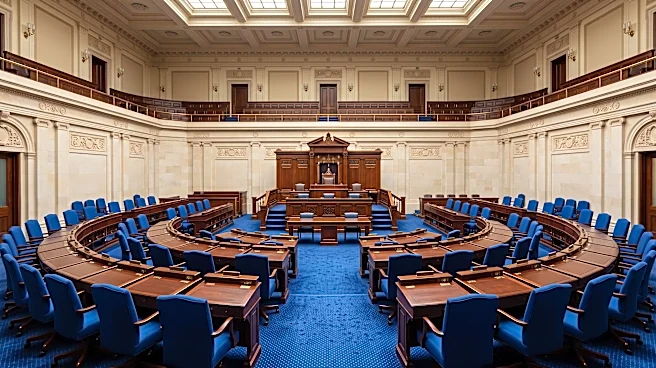
The U.S. Senate has unanimously passed the Wildfire Emissions Prevention Act (WEPA), bipartisan legislation introduced by Senators Jeff Merkley (D-OR) and John Curtis (R-UT). This act aims to simplify the process for states to use prescribed fires, also
known as controlled burns, as a tool for proactive forest management. The legislation seeks to reduce hazardous fuels, protect ecosystems and wildlife habitats, and ultimately make American forests and communities safer and healthier. Senator Merkley emphasized that prescribed fire and cultural burning are crucial for mitigating wildfire threats, especially as climate change contributes to longer and more dangerous wildfire seasons. The bill also includes provisions to establish a 'Smoke Ready Communities Program' to help communities plan and prepare for smoke events, thereby protecting public health.
Why It's Important?
The unanimous passage of the Wildfire Emissions Prevention Act is significant because it addresses a critical need in wildfire management across the U.S. Wildfires pose an escalating risk, with 333 active wildfires currently burning across 30 states, affecting approximately 616,740 acres. The traditional approach of suppressing all fires has led to an accumulation of dry, flammable vegetation, making subsequent wildfires more severe. This legislation promotes a shift towards proactive management, which is often cheaper and less destructive than dealing with the aftermath of catastrophic fires. By streamlining the use of prescribed burns, the act aims to reduce the intensity and spread of wildfires, thereby protecting communities, infrastructure, and natural resources. It also acknowledges the importance of air quality and public health by including measures for smoke preparedness, recognizing that smoke events can have significant health impacts.
What's Next?
Following its unanimous passage in the Senate, the Wildfire Emissions Prevention Act will now move to the House of Representatives for consideration. Senator Curtis has urged the House to act quickly to send the bill to the President's desk. If enacted, the law would empower states and communities with more flexibility to implement prescribed fire programs without facing regulatory penalties. This could lead to an increase in controlled burns across fire-prone regions, particularly in the Western U.S., where forest health initiatives are crucial. The establishment of the 'Smoke Ready Communities Program' would also necessitate the development of new guidelines and resources for local governments and residents to manage the health impacts of smoke. The long-term success of the act will depend on its effective implementation and continued bipartisan support for proactive wildfire prevention strategies.
Beyond the Headlines
The Wildfire Emissions Prevention Act reflects a growing recognition of the complex interplay between climate change, land management practices, and community safety. Historically, fire suppression policies have inadvertently contributed to the severity of modern wildfires. This legislation represents a policy shift towards integrating ecological understanding—such as the historical role of low-intensity fires in North American forests—into contemporary land management. Beyond the immediate benefits of reducing wildfire risk, the act could foster a broader cultural acceptance of prescribed burning as a necessary tool for ecosystem health. It also highlights the ethical dimension of balancing environmental protection with public health concerns, particularly regarding smoke exposure. The emphasis on 'Smoke Ready Communities' underscores a proactive approach to public health, acknowledging that even controlled burns require careful planning to minimize adverse effects on vulnerable populations. This legislative effort could set a precedent for more holistic and adaptive approaches to environmental challenges in the face of a changing climate.