
What's Happening?
As the Arctic Ocean becomes increasingly ice-free due to climate change, legal challenges arise regarding the regulation of sea ice. The first-ever Arctic commercial-container route from Asia to Europe
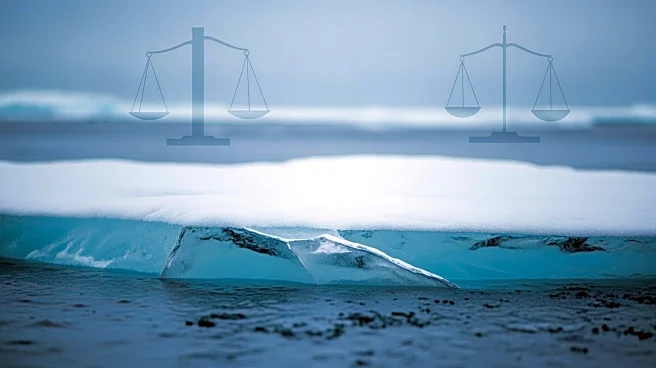
highlights the economic opportunities and environmental risks of a less icy Arctic. The United Nations' special envoy for the ocean has called for a pause on new economic activities in the Central Arctic Ocean to study climate risks. Some scholars propose granting legal personhood to sea ice to protect it from exploitation. This concept would provide sea ice with a representative to argue for its protection, similar to rights granted to natural entities in other countries.
Why It's Important?
The melting Arctic ice presents both opportunities and challenges. Economically, new shipping routes and access to fossil fuels are attractive, but they pose significant environmental risks. The lack of legal frameworks for sea ice complicates efforts to manage these risks. Granting legal personhood to sea ice could provide a robust mechanism for its protection, ensuring that economic activities do not exacerbate climate change impacts. This approach could also involve Indigenous communities in decision-making processes, recognizing their traditional knowledge and rights. As the Arctic continues to warm, establishing clear legal protections for sea ice is crucial for global climate stability.
Beyond the Headlines
The proposal to grant legal personhood to sea ice raises complex ethical and legal questions. It challenges traditional notions of environmental law and requires international cooperation to be effective. The concept also highlights the need to balance economic development with environmental protection, particularly in vulnerable regions like the Arctic. Involving Indigenous communities in governance could lead to more sustainable and culturally sensitive management practices. As climate change accelerates, innovative legal frameworks may be necessary to protect critical ecosystems and ensure long-term environmental health.