




What's Happening?
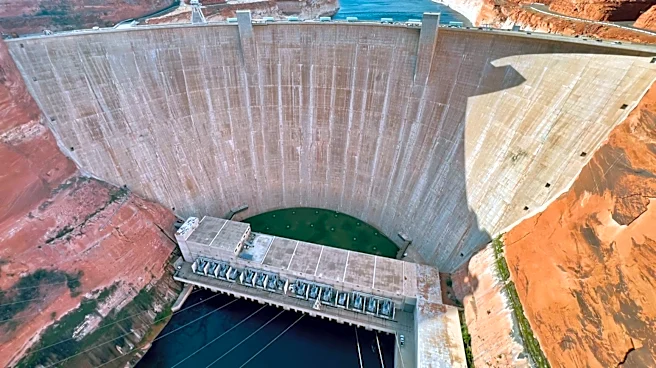
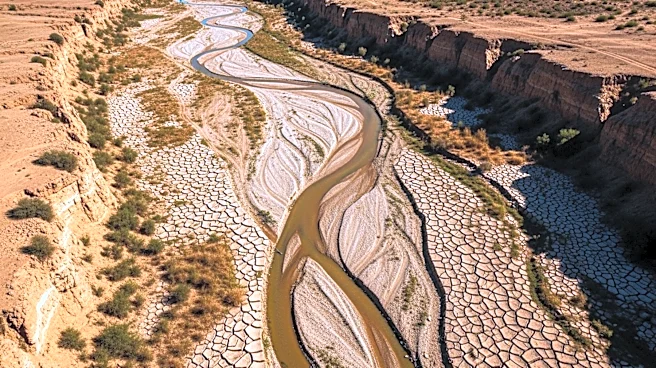
The U.S. government has proposed a plan to address the severe drought affecting the Colorado River, which could result in up to a 40% reduction in water supplies for Arizona, California, and Nevada. This plan, shared by a senior Arizona water official,
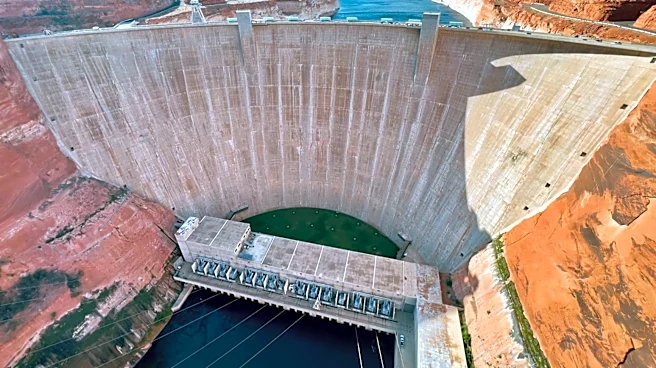
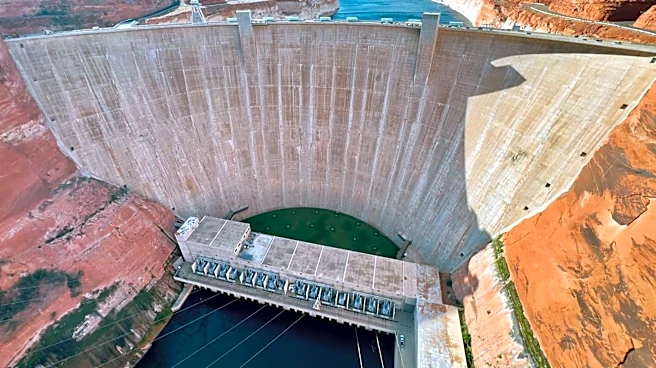
aims to manage the critically low water levels in the river's reservoirs, Lake Mead and Lake Powell. The proposal suggests cutting water use by up to 3 million acre-feet annually over a 10-year period. This amount of water is sufficient to supply between 6 million to 9 million households for a year, exceeding the number of homes in Arizona and Nevada. The plan is a response to the failure of seven states to reach an agreement on water cuts by a federal deadline earlier this year. The U.S. Bureau of Reclamation, which proposed the plan, intends to implement it under existing Colorado River law or through state agreements.
Why It's Important?
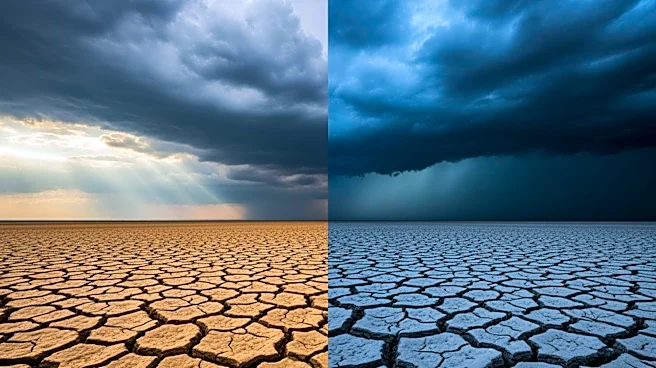
The proposed water cuts are significant due to the ongoing drought and overuse of the Colorado River, which supplies water to approximately 40 million people in the American West. The reductions could have substantial impacts on agriculture, urban water supply, and overall economic activities in the affected states. Arizona, California, and Nevada, which are already experiencing water shortages, may face further challenges in managing their water resources. The plan underscores the urgency of addressing water scarcity in the region and highlights the need for collaborative efforts among states to ensure sustainable water management. The federal intervention reflects the critical state of the river and the necessity for decisive action to prevent further depletion of vital water resources.
What's Next?
The proposed plan is set to be finalized in June, with water reductions evaluated every two years. The states involved will need to cooperate with federal agencies to implement the cuts effectively. The U.S. Bureau of Reclamation will continue to assess the risks and benefits of the plan, considering the legal framework of the 1922 Colorado River Compact, which prioritizes California's water use. The outcome of these negotiations and the implementation of the plan will be closely monitored by stakeholders, including state water agencies and environmental groups. The situation may prompt further discussions on long-term water management strategies and the development of alternative water sources to mitigate the impact of the cuts.