
What's Happening?
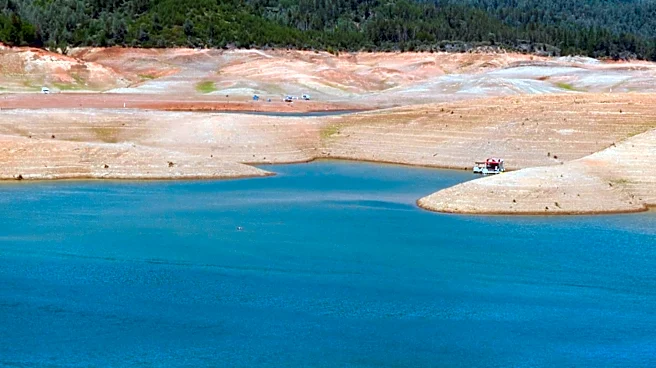
Lake Powell, a critical Colorado River reservoir, has fallen to its lowest recorded level, reaching an elevation of 3,519.91 feet above sea level. This new record, set on Saturday, surpasses the previous low from April 2023. The reservoir has dropped
over 20 feet since the beginning of the year and is now approximately 30 feet above the minimum level required for its turbines to generate hydroelectric power. Federal officials issued a warning in April, indicating that a 'major intervention' might be necessary to prevent Lake Powell from reaching this critical threshold before the year's end. This decline follows a similar record low for Lake Mead, the Colorado River's other major reservoir, about a week prior. Both reservoirs are vital components of a river system that supplies water and power to over 40 million people across seven Western states, including California, Arizona, Nevada, New Mexico, Utah, Wyoming, and Colorado.
Why It's Important?
The record low water levels in Lake Powell pose a significant threat to the water and power supply for millions of people in the U.S. West. The potential cessation of hydroelectric power generation from Lake Powell would reduce the region's energy capacity, potentially leading to increased energy costs and reliance on other, possibly less sustainable, power sources. More critically, the dwindling water supply impacts agricultural production, urban consumption, and ecological systems across the affected states. The ongoing dispute among the seven Colorado River Basin states over water management highlights the severe resource scarcity and the challenges in reaching equitable solutions. The U.S. Bureau of Reclamation's proposed 10-year plan, which could result in substantial water cuts for California, Arizona, and Nevada, underscores the urgency and potential economic and social disruptions if a long-term solution is not found. The decline also negatively affects the recreation and tourism industries surrounding Lake Powell, impacting local economies.
What's Next?
Federal officials and the seven Colorado River Basin states will continue to negotiate and seek a consensus on how to manage the shrinking water supply. The U.S. Bureau of Reclamation's proposed 10-year plan, which includes potential major water cuts for California, Arizona, and Nevada, will be a central point of discussion and potential implementation. There is an urgent need for a 'major intervention' to prevent Lake Powell from dropping below the level required for hydroelectric power generation, which could involve further water releases from upstream reservoirs or other conservation measures. Marinas and recreational facilities around Lake Powell will likely continue to adapt to the retreating shoreline, with ongoing adjustments to boat ramps and infrastructure. The long-term outlook will depend on future precipitation levels, climate patterns, and the ability of state and federal agencies to agree on and enforce sustainable water management policies.
Beyond the Headlines
The record low levels of Lake Powell and Lake Mead are stark indicators of the long-term impacts of climate change and prolonged drought conditions in the U.S. West. This situation transcends immediate water and power concerns, pointing to a fundamental challenge in how human populations interact with finite natural resources in an era of environmental instability. The conflict among states over water allocation highlights the complex legal and political frameworks governing shared resources, which were established under different climatic conditions. This crisis could accelerate the adoption of innovative water conservation technologies, promote more efficient agricultural practices, and drive urban planning towards sustainable water use. It also raises ethical questions about resource distribution and the responsibility of current generations to ensure water security for future generations. The ongoing decline of these vital reservoirs serves as a powerful symbol of the broader ecological shifts impacting the nation.