



What's Happening?
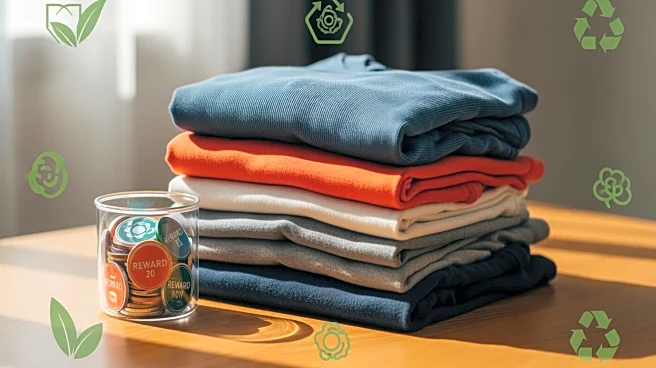
The European Union is initiating a pilot program in Spain aimed at enhancing sustainability and managing textile waste through a reward-based system for used clothing collection. This initiative, part of the TexMat project, is funded by the EU's Horizon
Europe program with a grant of over 6.76 million euros. The project involves the installation of automated and smart containers that pre-sort clothing and offer financial incentives to consumers. The VTT Technical Research Centre of Finland leads the project, with participation from the University of Coruña, Humana, IRIS Technology Solutions, and Rovimatica. The program seeks to embed a circular and second-hand model within the European consumer mindset, contributing to the EU's greenhouse gas reduction targets for 2030 and 2050.
Why It's Important?
This initiative is significant as it addresses the growing issue of textile waste in Europe, promoting a shift towards a circular economy. By incentivizing consumers to participate in textile waste management, the program aims to reduce environmental impact and foster industrial sustainability. The project also supports the development of new business models and technologies, potentially leading to profitable opportunities in the second-hand market. This aligns with the European Green Deal's objectives, enhancing resource independence and competitiveness within the EU. The program's success could serve as a model for other regions, encouraging broader adoption of sustainable practices in the textile industry.
What's Next?
The pilot program will run until March 2029, during which the effectiveness of the reward-based system will be evaluated. The results will inform potential scaling of these systems across Europe. Stakeholders, including policymakers and industry leaders, will likely monitor the program's impact on consumer behavior and textile waste management. The initiative may prompt further regulatory developments, such as the implementation of Extended Producer Responsibility schemes in the textile sector. As the program progresses, it could lead to increased consumer engagement and a more sustainable textile economy.
Beyond the Headlines
The program highlights the ethical and cultural shift towards sustainability in consumer behavior. By rewarding responsible decisions, it encourages a societal move towards valuing environmental stewardship. The initiative also raises questions about the role of technology in waste management, as automated systems replace manual labor, potentially impacting employment in the sector. Long-term, the program could influence global textile industry standards, promoting a more sustainable and equitable approach to fashion consumption.