



What's Happening?
Representative Val Hoyle announced an additional $204 million in federal funding for the Port of Coos Bay. This grant, provided by the U.S. Department of Transportation’s Consolidated Rail Infrastructure and Safety Improvements (CRISI) grants program,
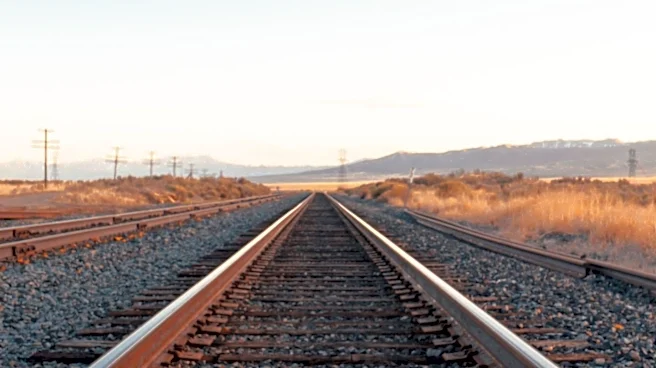
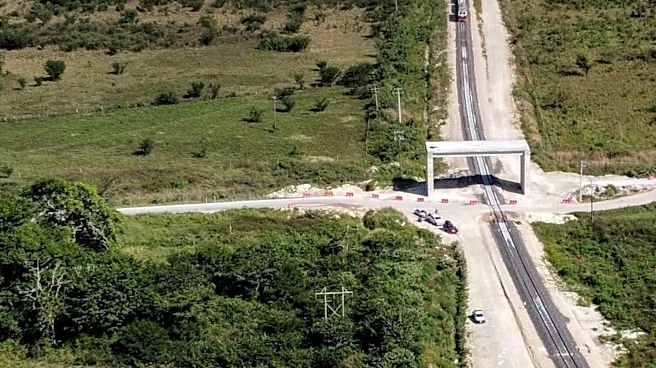
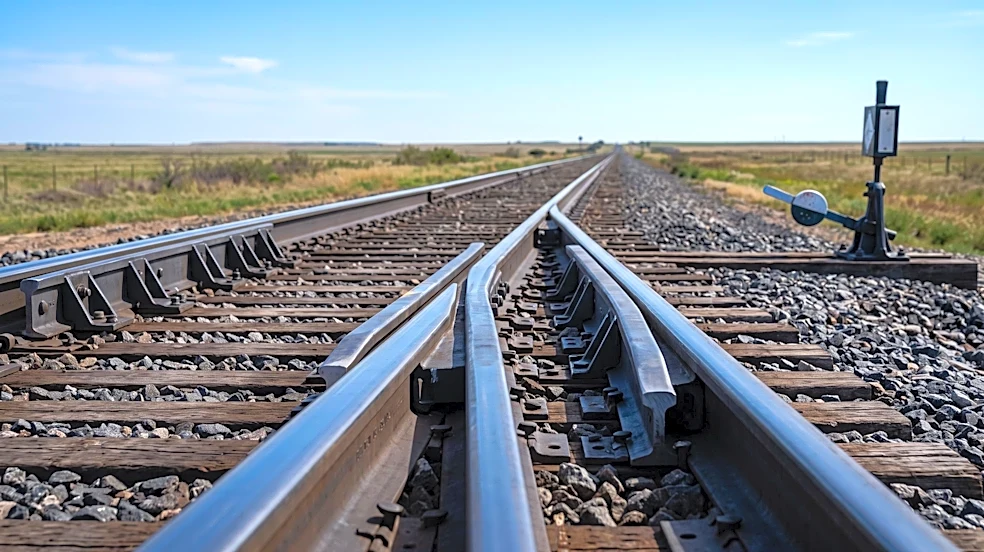
is designated for upgrades to the Coos Bay Rail Line. The improvements will involve repairing and replacing track, ties, bridges, and tunnels. This funding aims to enhance the rail line's capacity and reliability, preparing it to support the proposed Pacific Coast Intermodal Port (PCIP). With this latest allocation, Representative Hoyle has secured nearly $300 million in total federal funding for the PCIP, including previous grants such as $29.75 million through CRISI, $25.018 million through INFRA, $11.25 million through the Port Infrastructure Development Program, and $3.993 million through the Rail Crossing Elimination Grant. Oregon Senators Jeff Merkley and Ron Wyden, along with Kyle Stevens, President of the Oregon International Port of Coos Bay Board of Commissioners, have also highlighted the significance of this investment for the region.
Why It's Important?
This substantial federal investment is critical for the economic development of Oregon's South Coast and the broader U.S. supply chain. The upgrades to the Coos Bay Rail Line are a foundational step towards establishing the Pacific Coast Intermodal Port as the first fully ship-to-rail port facility on the West Coast. This project is expected to create significant economic opportunities, including an estimated 2,500 permanent jobs and another 2,500 temporary construction jobs, providing a much-needed boost to a regional economy historically reliant on the timber industry. By enhancing supply chain resilience and capacity, the port could alleviate pressure on existing West Coast ports and offer a new gateway for container traffic, potentially impacting national logistics and trade flows. The project's success could also influence future federal infrastructure funding decisions for similar intermodal projects across the country, demonstrating the potential for strategic investments to drive regional and national economic benefits.
What's Next?
The $204 million grant will fund the final design and construction phases of the Coos Bay Rail Line improvements. The next steps for the broader Pacific Coast Intermodal Port project include selecting contractors for permitting and environmental reviews, with proposals due by October 28. Following these selections, comprehensive environmental reviews and public comment periods will be conducted. While this funding marks a significant milestone, the full PCIP project, estimated to cost over $2 billion, still requires additional funding and regulatory approvals before it can become operational. Supporters, including Oregon's federal delegation, will continue to advocate for the project's progression, emphasizing its potential for job creation and supply chain enhancement. However, environmental advocates have raised concerns regarding dredging and its impact on wildlife, suggesting potential challenges in the upcoming review processes.
Beyond the Headlines
The development of the Pacific Coast Intermodal Port represents a strategic shift in U.S. port infrastructure, aiming to create a new deepwater container terminal with a direct ship-to-rail connection. This initiative could reshape freight movement patterns on the West Coast, potentially diverting some traffic from established hubs like Portland, Seattle, and Tacoma. The project also highlights the ongoing debate between economic development and environmental conservation, as concerns about the ecological impact of dredging and construction are weighed against the promise of job creation and economic diversification. Furthermore, the emphasis on a ship-to-rail model reflects a broader trend in logistics to improve efficiency and reduce road congestion, aligning with national goals for sustainable transportation. The long-term success of this project could serve as a blueprint for future intermodal developments, influencing how the U.S. approaches large-scale infrastructure investments and regional economic revitalization.