






What's Happening?
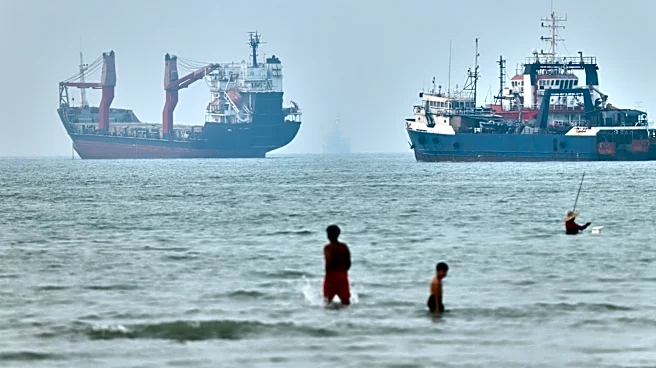
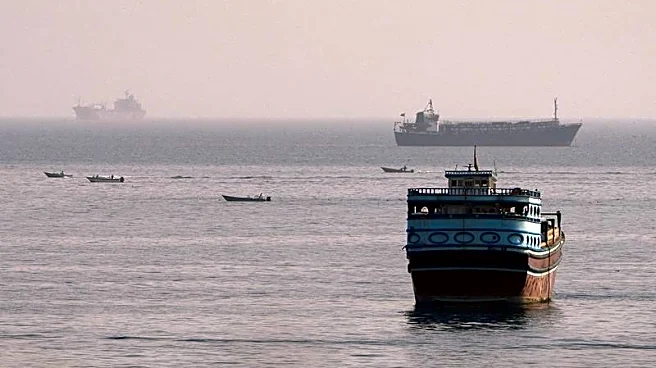
A cargo ship was reportedly hit by a projectile in the Strait of Hormuz, according to a British maritime monitoring agency. The incident occurred off the coast of Oman and has heightened tensions in the region. The U.S. and Iran are currently engaged
in discussions to potentially reopen the strait, which is a critical waterway for global oil shipments. Treasury Secretary Scott Bessent indicated that a deal could be reached soon to allow commercial ships to pass freely. President Trump has stated that talks are ongoing, although Iran has publicly downplayed the extent of these discussions. The situation remains tense as both nations navigate the complexities of the conflict.
Why It's Important?
The Strait of Hormuz is a vital chokepoint for the global oil supply, and any disruption can have significant economic repercussions. The reported attack on the cargo ship underscores the fragility of maritime security in the region. Successful negotiations between the U.S. and Iran to reopen the strait could stabilize oil markets and reduce geopolitical tensions. However, the ongoing conflict and differing narratives from the involved parties highlight the challenges in reaching a lasting resolution. The situation also impacts global energy prices and has broader implications for international trade and security.
What's Next?
If a deal is reached, it could lead to a temporary easing of tensions and a resumption of normal shipping operations in the Strait of Hormuz. However, the underlying issues between the U.S. and Iran, including nuclear negotiations and regional influence, remain unresolved. Future developments will depend on the willingness of both parties to engage in sustained dialogue and address broader geopolitical concerns. The international community will be closely monitoring the situation, as any escalation could have far-reaching consequences.