









What's Happening?
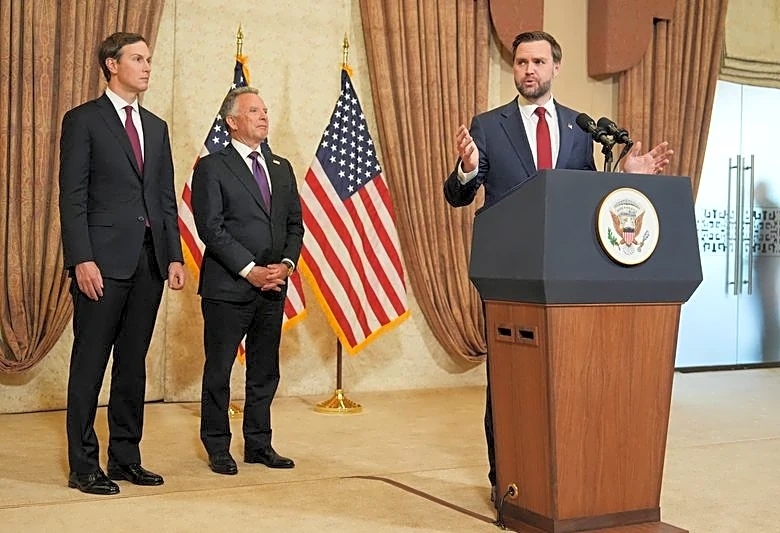
The Washington Post reports that the recent U.S.-Iran talks in Islamabad, led by Vice President JD Vance, concluded without reaching an agreement on Iran's nuclear program. Despite extensive negotiations lasting 21 hours, the critical issue of Iran's nuclear capabilities
remained unresolved. In response, President Trump announced a blockade of the Strait of Hormuz, aiming to apply economic pressure on Iran. The blockade is part of a broader strategy to compel Iran to agree to a comprehensive deal that includes renouncing its nuclear and missile programs.
Why It's Important?
The failure to reach a nuclear agreement with Iran has significant implications for U.S. foreign policy and regional stability in the Middle East. The blockade of the Strait of Hormuz could disrupt global oil supplies, affecting international markets and economies. Trump's approach, focusing on economic pressure rather than military action, reflects a strategic shift that could influence future diplomatic engagements. The situation also highlights the challenges of negotiating with Iran, a country with complex political dynamics and longstanding tensions with the U.S.
What's Next?
The Trump administration is likely to continue pursuing diplomatic channels, possibly through intermediaries, to achieve a resolution with Iran. The blockade is expected to intensify economic pressure on Iran, potentially leading to further negotiations or escalations. The U.S. may explore additional strategies to address Iran's nuclear ambitions, involving international partners and allies. The outcome of these efforts will be crucial in determining the future of U.S.-Iran relations and the broader geopolitical landscape in the Middle East.