




What's Happening?
Representative Brian Mast, the incumbent Republican for Florida's 21st Congressional District, has announced that the U.S. Department of Transportation has awarded a $78.9 million grant to the City of Stuart. This funding is designated for the replacement
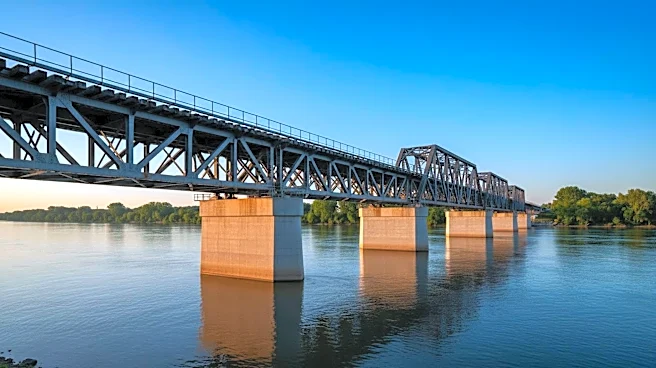
of the St. Lucie River Railroad Bridge. The current bridge, described as a century-old drawbridge, is considered too low, too narrow, and frequently gets stuck in the closed position. The grant is part of a larger $262 million project aimed at replacing this outdated infrastructure. The new design will feature a double-track structure, significantly increasing both horizontal and vertical clearances. This development follows a previous action by the Coast Guard last September, which issued a final ruling on the bridge's operating schedule, keeping it open by default and limiting closures. The new funding is expected to fully address the long-standing issues with the bridge.
Why It's Important?
The replacement of the St. Lucie River Railroad Bridge is a critical infrastructure project with significant implications for Florida's economy and regional connectivity. The existing bridge's limitations, including its age, narrowness, and frequent operational issues, have likely caused disruptions to both marine and rail traffic. By replacing it with a modern double-track structure and increasing clearances, the project aims to improve safety and efficiency for both Brightline Trains and Florida East Coast Railway, which rely on this corridor for daily passenger and freight movement. Furthermore, enhanced marine navigation along the Okeechobee Waterway, a federally designated channel, will benefit the marine industry and local communities. This investment underscores the importance of robust rail and waterway infrastructure for supporting economic growth, facilitating the movement of goods, and connecting people across the state. The project is expected to reduce delays and improve overall transportation reliability in the region.
What's Next?
The $78.9 million federal grant marks a significant step forward for the St. Lucie River Railroad Bridge replacement project, which is part of a larger $262 million initiative. With this funding secured, the City of Stuart can proceed with the detailed planning and execution phases of replacing the century-old bridge. The project will involve constructing a new double-track structure designed to offer substantially improved vertical and horizontal navigational clearances, addressing the current bridge's limitations. Stakeholders, including the marine industry, local communities, and transportation partners, will likely monitor the project's progress closely. The successful completion of this project is anticipated to lead to enhanced safety, reduced traffic congestion, and more efficient movement of both rail and marine traffic in the region. The focus will now shift towards the implementation of the project, with continued oversight from relevant federal and local authorities.
Beyond the Headlines
Beyond the immediate benefits of improved transportation and safety, the St. Lucie River Railroad Bridge replacement project highlights a broader national trend of investing in aging infrastructure. Many parts of the U.S. rely on infrastructure built decades or even a century ago, which are increasingly unable to meet modern demands for capacity and efficiency. This project serves as an example of how federal grants can catalyze significant local improvements, addressing long-standing bottlenecks and enhancing regional economic vitality. The emphasis on increasing both horizontal and vertical clearances reflects a forward-looking approach, anticipating future growth in both rail and marine traffic. Furthermore, the project's success could set a precedent for similar infrastructure initiatives in other regions facing comparable challenges, demonstrating the tangible benefits of strategic federal investment in critical transportation arteries. It also underscores the complex interplay between federal, state, and local entities in funding and executing large-scale public works.