






What's Happening?
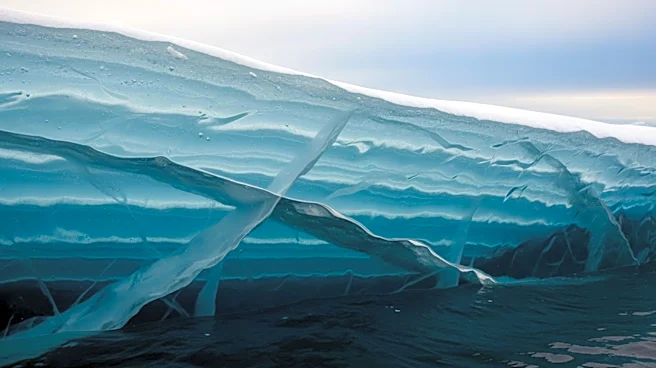
A recent study conducted by scientists from the iC3 Polar Research Hub in Tromsø, Norway, has uncovered hidden mechanisms beneath the Fimbulisen Ice Shelf in East Antarctica that could significantly impact global sea level rise. The research, published
in Nature Communications, reveals that the shape of the ice shelf's underside can trap ocean heat, accelerating the melting process. This discovery highlights the potential for increased instability in the ice shelf, which could lead to more land ice flowing into the ocean. The study emphasizes the need to incorporate these small-scale warming processes into future models to better predict the impact of sea-level rise.
Why It's Important?
The findings of this study are crucial as they provide new insights into the dynamics of ice shelf melting, which is a major contributor to global sea level rise. Understanding these hidden mechanisms is vital for improving predictive models and preparing for the potential consequences of rising sea levels. The research suggests that even small amounts of warmer water can significantly increase melting rates, potentially leading to the destabilization of ice shelves. This could result in accelerated ice flow from land into the ocean, contributing to higher sea levels and posing a threat to coastal communities worldwide.
What's Next?
Future research will need to focus on incorporating these small-scale melting processes into global climate models to provide a more accurate picture of sea-level rise. Scientists will likely continue to explore the underside of ice shelves to better understand the complex interactions between ocean heat and ice dynamics. Additionally, policymakers and environmental organizations may need to consider these findings when developing strategies to mitigate the impacts of climate change and protect vulnerable coastal areas.
Beyond the Headlines
The study underscores the complexity of climate change and the interconnectedness of natural systems. It highlights the importance of continued scientific research to uncover hidden processes that could have significant implications for the planet. The findings also raise ethical considerations regarding the responsibility of nations to address climate change and protect future generations from its impacts.