






What's Happening?
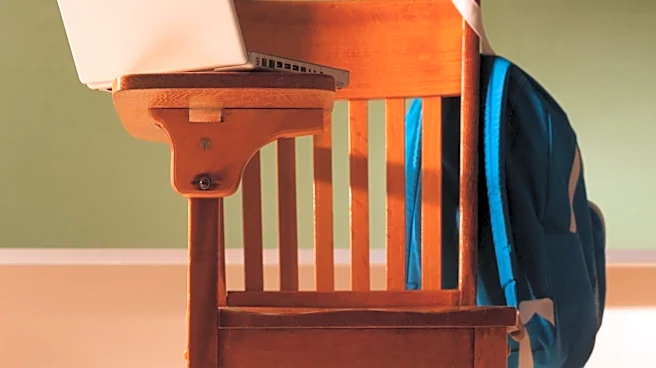
Families in the Round Rock Independent School District (RRISD) are actively petitioning the district to adopt more restrictive technology policies, advocating for screen-free classrooms, particularly for younger students. A coalition named 'Schools Beyond
Screens - Round Rock ISD' has gathered over 1,200 signatures on a petition urging the district to eliminate device use in PreK-2nd grade, end 1:1 device use in grades 3-5, and implement specific, enforceable screen time limits for grades 3-12. Parents express concerns that excessive screen time on laptops and Chromebooks leads to a decline in critical thinking skills, impacts academic performance, and can be distracting, with some children using devices for games rather than educational purposes. A May report from the Federal Communications Commission noted that children as young as eight spend up to five and a half hours daily on screens, correlating increased screen time with lower reading and math achievement.
Why It's Important?
This movement in Round Rock ISD is significant as it reflects a growing national concern among parents and educators about the pervasive role of technology in schools and its potential negative effects on student development. The push for screen-free policies highlights a desire to re-emphasize traditional learning methods, critical thinking, and hands-on engagement, which some believe are being eroded by over-reliance on digital tools. The data linking increased screen time to declining academic skills in reading and math underscores the urgency of these concerns. If adopted, these policies could set a precedent for other school districts grappling with similar issues, potentially influencing curriculum development, technology procurement, and teaching methodologies across the country. It also brings to the forefront the debate on how to balance technological literacy with foundational learning skills.
What's Next?
The Round Rock ISD board of trustees will need to consider the petition and the proposed policy changes. While Dr. Natalie Nichols from RRISD acknowledged the district's value in partnering with families and its review of current technology use practices, it is not yet clear when or if the board will update its technology policy. Candidates for the RRISD Board of Trustees, such as Amber Feller Landrum and Ayaan Moledina, have expressed varying degrees of support for developing a screen time policy, emphasizing age-appropriate guidelines and distinguishing between active and passive technology use. The ongoing discussions will likely involve further community input, expert consultations, and a careful evaluation of the educational impact of current technology practices versus the proposed screen-free alternatives. The outcome in Round Rock could serve as a case study for other districts facing similar pressures.
Beyond the Headlines
The debate over screen time in schools extends beyond mere policy adjustments; it delves into fundamental questions about the purpose of education in the digital age and the long-term societal implications of a screen-saturated childhood. This movement challenges the assumption that technology is always beneficial in the classroom, prompting a re-evaluation of what constitutes effective learning and development. It also highlights the digital divide, as some candidates acknowledge the need to ensure equitable access to learning technology for students who may not have it at home, even while advocating for reduced screen time in schools. The broader implications include potential shifts in educational philosophy, a renewed focus on teacher autonomy in instructional methods, and a societal reckoning with the balance between technological integration and the preservation of essential human cognitive and social skills.