


What's Happening?
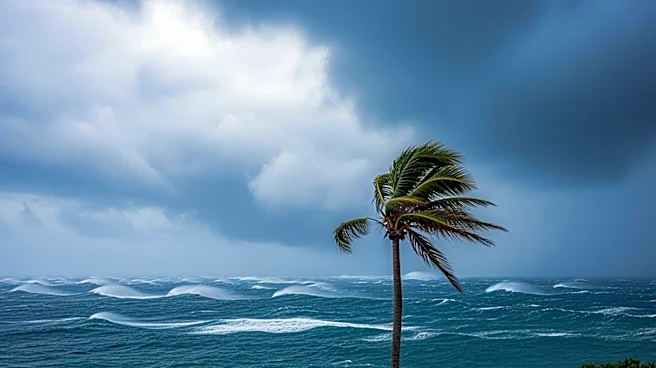
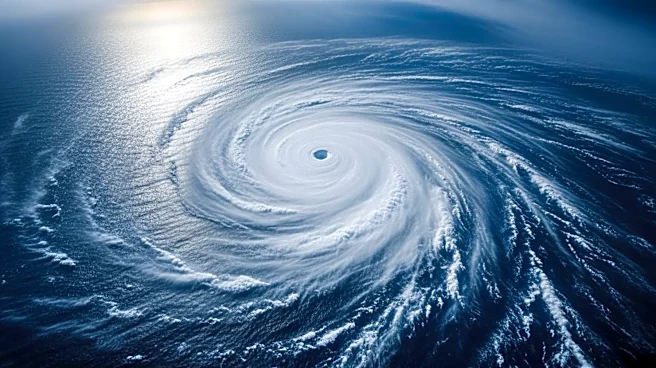
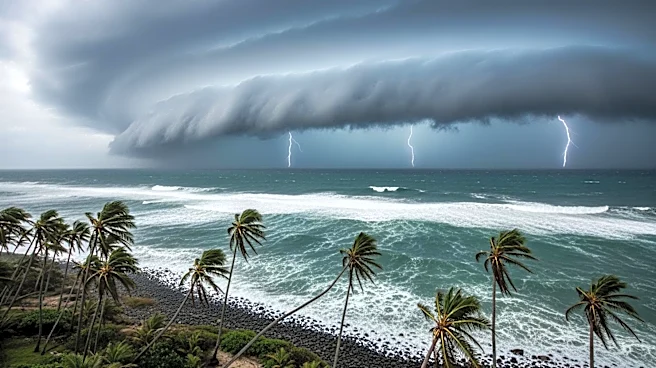
Super Typhoon Sinlaku has hit the Northern Mariana Islands, including Saipan and Tinian, with winds reaching up to 150 mph. The storm has caused significant damage, including uprooted trees, downed power lines, and flooding. Residents have been advised
to stay indoors as the storm continues to batter the islands. The U.S. military has instructed personnel to shelter in place, and the American Red Cross is providing shelter to over 1,000 residents. The islands, still recovering from previous typhoons and the COVID-19 pandemic, are facing severe conditions.
Why It's Important?
The impact of Super Typhoon Sinlaku is significant as it affects the Northern Mariana Islands, a U.S. territory with strategic military importance. The islands are still recovering from past natural disasters and the economic downturn caused by the pandemic. The storm's damage could further delay recovery efforts and strain local resources. The U.S. military's presence in the region underscores the strategic importance of these islands, and the storm's impact could affect military operations and readiness. Additionally, the event highlights the increasing frequency and intensity of storms, raising concerns about climate change and its effects on vulnerable regions.
What's Next?
As the storm moves northwest, authorities will continue to assess the damage and coordinate relief efforts. The Federal Emergency Management Agency (FEMA) is involved in providing support, and further assistance may be required to aid recovery. The islands will need to address infrastructure damage and ensure the safety and well-being of residents. Long-term recovery plans will likely focus on rebuilding and strengthening infrastructure to withstand future storms. The situation may prompt discussions on climate resilience and the need for sustainable development in the region.