









What's Happening?
The condition of the 2026 U.S. corn crop remains stable at 67% rated good/excellent, with improvements noted in central states and declines in western states. The top-rated corn states include Minnesota, Wisconsin, Pennsylvania, Michigan, and Tennessee,
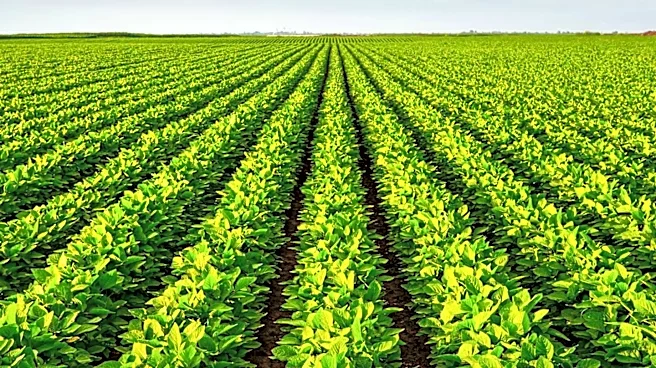
while North Carolina, Colorado, Texas, Ohio, and Illinois are at the bottom. Corn is 16% silking, slightly below last year's 17%. Meanwhile, the soybean crop condition has declined by 1% to 64% rated good/excellent, with improvements in central areas and declines in southern regions. Minnesota, Wisconsin, Iowa, Tennessee, and Mississippi lead in soybean ratings, whereas North Carolina, Ohio, North Dakota, Illinois, and Missouri lag behind. Soybeans are 34% blooming, surpassing last year's 30%. Soil moisture levels have decreased, with improvements in central areas and declines in southern regions.
Why It's Important?
The mixed conditions of corn and soybean crops have significant implications for the U.S. agricultural sector, affecting market prices and supply chains. The stability in corn conditions suggests a potentially steady yield, which is crucial for meeting domestic and international demand. However, the decline in soybean conditions could lead to supply shortages, impacting prices and export capabilities. Regional variations in crop conditions highlight the importance of localized agricultural strategies and resource allocation. The decline in soil moisture levels could exacerbate challenges for farmers, particularly in areas already experiencing drought conditions.
What's Next?
As July is critical for corn pollination and soybean flowering, weather patterns in the coming weeks will be pivotal. The forecast of hotter and drier conditions could further stress crops, particularly in regions already facing moisture deficits. Farmers may need to adjust irrigation practices and resource management to mitigate potential yield losses. Monitoring weather forecasts and adapting to changing conditions will be essential for optimizing crop outcomes. Additionally, market analysts and policymakers will closely watch these developments to anticipate potential impacts on agricultural markets and food security.