
What's Happening?
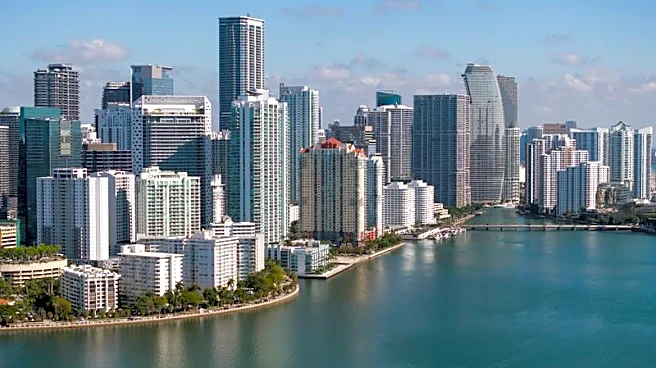
Florida Governor Ron DeSantis has dismissed a lawsuit alleging that he, along with other Florida officials and President Trump, violated the U.S. Constitution by transferring valuable Miami land for the future
Trump Presidential Library. The lawsuit, filed by several Miami residents, claims that the transfer of the 2.63-acre property, previously owned by Miami Dade College and appraised at $67 million, to the Donald J. Trump Presidential Library Foundation violates the Domestic Emoluments Clause. This clause prohibits the president from receiving any emolument from the United States during their term. The plaintiffs argue that the land, which could sell for over $300 million, was given to Trump without cost, potentially disadvantaging other states and violating constitutional provisions. DeSantis, a Trump ally, argues that the land is for the foundation, not Trump personally, and sees the library as an educational opportunity for Miami Dade College.
Why It's Important?
The lawsuit raises significant constitutional questions about the limits of state incentives to a sitting president, particularly concerning the Domestic Emoluments Clause. If the court finds the transfer unconstitutional, it could set a precedent affecting how states engage with presidential projects. The case also highlights ongoing scrutiny of President Trump's business dealings and the potential for his presidential library to serve commercial interests. The outcome could influence public policy on presidential libraries and state-federal relations, impacting how future presidential projects are funded and developed. The legal challenge underscores the tension between state actions and federal constitutional mandates, with potential implications for governance and public trust.
What's Next?
The lawsuit seeks to nullify the land transaction, and its progression through the courts will be closely watched. If the court rules in favor of the plaintiffs, it could lead to a reevaluation of the land transfer and potentially halt the library's development. The case may prompt other states to reconsider similar projects, affecting how presidential libraries are planned and funded. Stakeholders, including Miami Dade College and local residents, will likely continue to voice their concerns, while the Trump Foundation and Florida officials may defend the project's legality and benefits. The legal proceedings could also influence public opinion on the ethical considerations of presidential projects.
Beyond the Headlines
The lawsuit touches on broader ethical and legal issues regarding the use of public office for private gain. It raises questions about the transparency and accountability of presidential projects, especially when they involve significant public resources. The case could lead to increased scrutiny of how presidential libraries are funded and operated, potentially prompting reforms to ensure they serve public interests rather than private or commercial ones. The controversy also reflects ongoing debates about the role of presidential legacies and the balance between honoring past administrations and adhering to constitutional principles.