
What's Happening?
NASA has announced the preliminary plan for Artemis III, the third mission in its Artemis program, which aims to return humans to the Moon. Scheduled for 2027, Artemis III will focus on testing capabilities
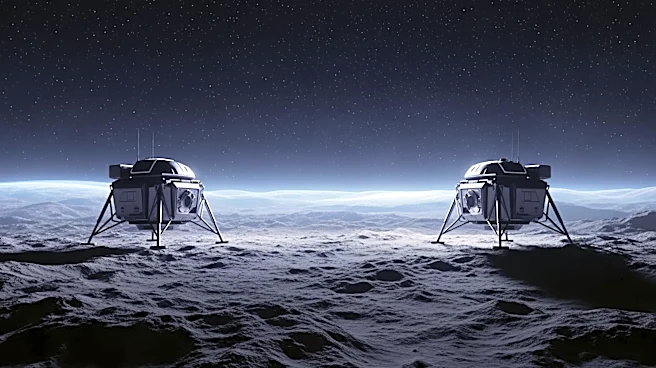
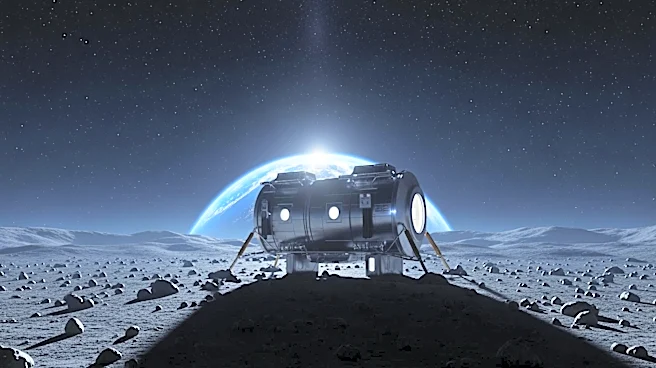
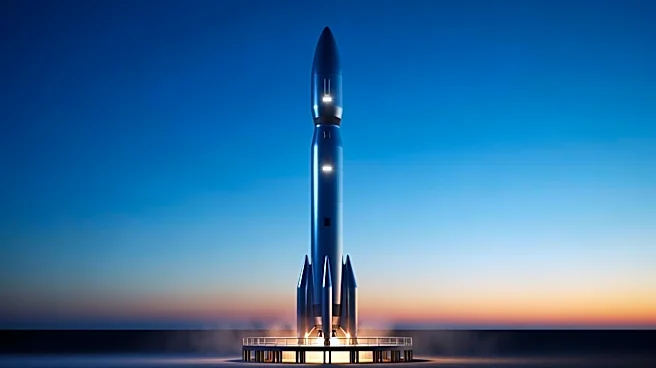
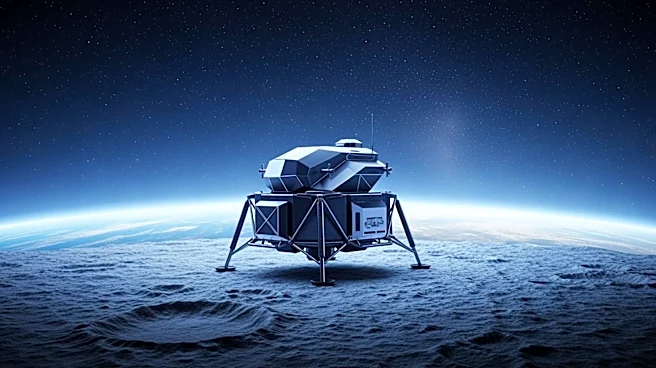
necessary for a Moon landing planned for 2028. Unlike its predecessor, Artemis II, which traveled beyond the Moon, Artemis III will remain in low Earth orbit (LEO). The mission will involve the Orion spacecraft, launched by the Space Launch System (SLS), carrying four astronauts. The mission will test the spacecraft's life support systems and docking capabilities with commercial lunar landers from SpaceX and Blue Origin. NASA is also seeking partners to provide communication capabilities and is open to deploying Cubesats during the mission.
Why It's Important?
The Artemis III mission is a critical step in NASA's long-term goal of establishing a sustainable human presence on the Moon. By testing the docking and life support systems in LEO, NASA aims to ensure the safety and reliability of future lunar missions. The involvement of commercial partners like SpaceX and Blue Origin highlights the growing role of private companies in space exploration. Successful execution of Artemis III could pave the way for more complex missions, including the eventual human landing on the Moon, which is a significant milestone in space exploration and could have implications for international collaboration and technological advancements.
What's Next?
NASA plans to finalize the mission's timeline, crew selection, and potential demonstrations of new spacesuits in the coming weeks. The agency is also working on the design and assembly of a 'spacer' to replace the upper stage of the SLS for this mission. The mission's success will depend on the readiness of the commercial lunar landers, with NASA closely monitoring the development timelines of SpaceX and Blue Origin. The outcome of Artemis III will influence the planning and execution of Artemis IV, which is expected to include the first crewed lunar landing since the Apollo era.