
What's Happening?
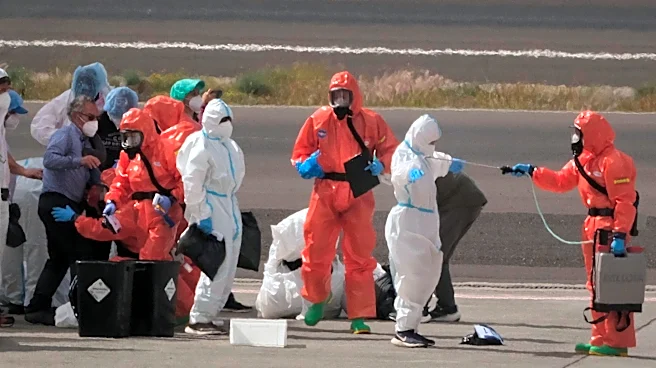
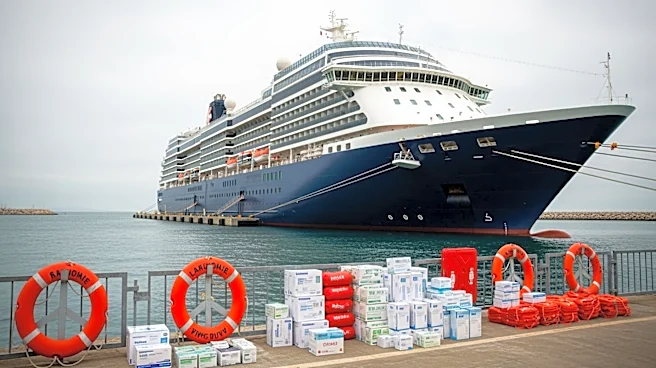
A cruise ship, MV Hondius, has been struck by a hantavirus outbreak, leading to the repatriation of passengers worldwide. The outbreak has resulted in three deaths and at least six confirmed cases, including
a French woman and an American who tested positive. The ship, which anchored in the Canary Islands, saw passengers evacuated by military and government planes. Health authorities have stated that the risk to the broader public is low, as hantavirus is typically spread through rodent droppings and not easily transmitted between people. The World Health Organization is involved in monitoring the situation, emphasizing early detection and treatment to improve survival rates.
Why It's Important?
The hantavirus outbreak on the MV Hondius highlights the challenges of managing infectious diseases in confined environments like cruise ships. This incident underscores the importance of international cooperation in health emergencies, as countries work to safely repatriate their citizens. The outbreak also raises awareness about hantavirus, a lesser-known virus compared to COVID-19, and the need for vigilance in preventing its spread. The situation serves as a reminder of the potential for infectious diseases to disrupt global travel and the importance of preparedness and rapid response in such scenarios.
What's Next?
As the repatriation efforts continue, health authorities will monitor the evacuated passengers for symptoms and potential spread of the virus. Countries involved in the evacuation are likely to implement quarantine measures and health checks to prevent further transmission. The World Health Organization will continue to provide guidance and support to affected nations. The cruise industry may face increased scrutiny and pressure to enhance health and safety protocols to prevent similar outbreaks in the future.