

What's Happening?
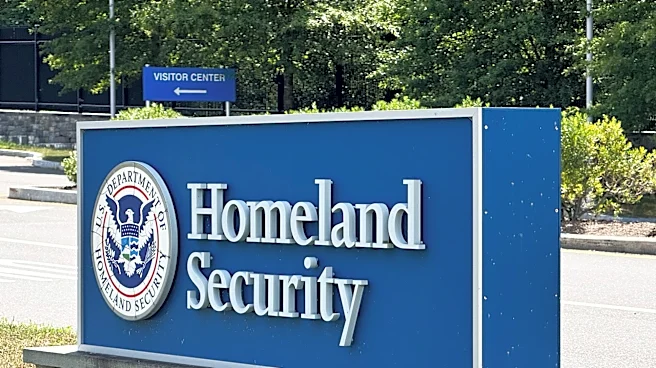
The National Football League (NFL) has formally requested that the Department of Homeland Security (DHS) remove a video featuring Hall of Famer Brian Dawkins. This request follows a statement released by DHS, which indicated that the United States Border
Patrol is 'actively tracking' migrants from Honduras and used football jargon, stating the department is 'playing lockdown defense' at the border. The specific content of the video featuring Brian Dawkins and its context within the DHS statement are not fully detailed, but the NFL's action suggests a concern regarding the use of its intellectual property or the association of one of its prominent figures with a politically charged message. DHS has not yet addressed the NFL's request to take down the video.
Why It's Important?
This incident highlights the intersection of sports, national security, and public relations, carrying significant implications for both the NFL and DHS. For the NFL, the unauthorized use of a Hall of Famer's image or likeness in a government communication, especially one related to a sensitive political issue like border security, could be seen as a breach of brand integrity and potentially alienate segments of its fan base. It underscores the league's efforts to control its public image and the use of its assets. For DHS, the use of sports analogies and figures in official communications, while potentially intended to be relatable, can backfire if it leads to disputes with major organizations like the NFL. This situation could also spark a broader discussion about the appropriate use of cultural references by government agencies and the boundaries between public service announcements and political messaging. The incident could also set a precedent for how sports leagues protect their intellectual property when it intersects with government communications.
What's Next?
The immediate next steps will likely involve further communication between the NFL and DHS regarding the video. DHS will need to decide whether to comply with the NFL's request, which could involve removing the video or editing it to exclude Brian Dawkins. The NFL may consider legal action if its request is not met, depending on the nature of the unauthorized use. This situation could also lead to public statements from both organizations clarifying their positions. Additionally, other sports leagues and public figures might take note of this incident and review their own policies regarding the use of their images or intellectual property by government entities. The outcome could influence future guidelines for government agencies on how they engage with popular culture and public figures in their communications.
Beyond the Headlines
Beyond the immediate dispute, this event touches upon deeper issues of intellectual property rights, the politicization of cultural icons, and the role of government communication in a polarized society. Ethically, it raises questions about whether public figures, even those in sports, should be implicitly or explicitly associated with government policies without their consent. Legally, it could test the boundaries of fair use and commercial rights when a government agency utilizes public figures for its messaging. Culturally, the use of sports metaphors in political discourse can be seen as an attempt to simplify complex issues, but it also risks trivializing them or creating unintended associations. This incident could contribute to a growing trend where cultural institutions, including sports leagues, become more vigilant about how their brands and personalities are used in political contexts, leading to stricter enforcement of intellectual property rights and a clearer separation between entertainment and government messaging.