






What's Happening?
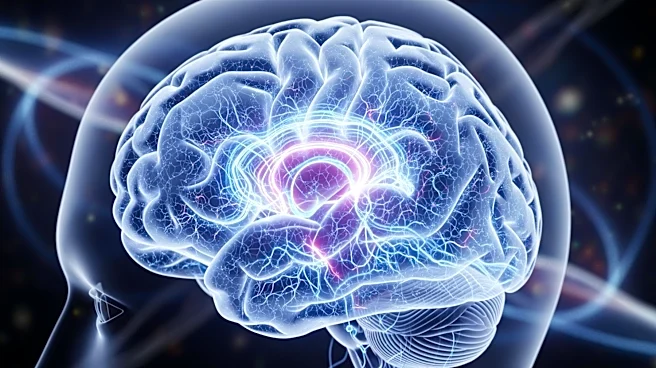
Recent research published in the Journal of Affective Disorders has identified a connection between narcissistic personality traits and the physical structure of the anterior insula, a brain region involved in emotional regulation. The study examined
brain scans of healthy adults and found that the volume and surface folding of the anterior insula are associated with narcissistic tendencies and emotional suppression. Narcissism is divided into grandiose and vulnerable dimensions, both of which share difficulties with emotion regulation. The anterior insula acts as a sensory integration center, translating bodily signals into conscious feelings, which is crucial for self-awareness and empathy. The study's findings suggest that the anterior insula serves as a convergence zone where self-image, physical structure, and emotional habits intersect.
Why It's Important?
Understanding the link between narcissistic traits and brain structure is crucial for developing therapeutic approaches to address the social and personal costs of narcissistic behavior. The study highlights the anterior insula's role in managing emotional suppression, which could inform clinical strategies for individuals struggling with narcissism. By addressing the habit of hiding emotions, clinicians may help patients improve their interpersonal relationships and emotional well-being. This research contributes to the broader field of behavioral neuroscience by exploring how personality traits manifest in brain anatomy, offering potential pathways for targeted interventions.